A museum where children, young people and families can imagine, play and design. Be inspired by spaces, explore our collection and get creative.
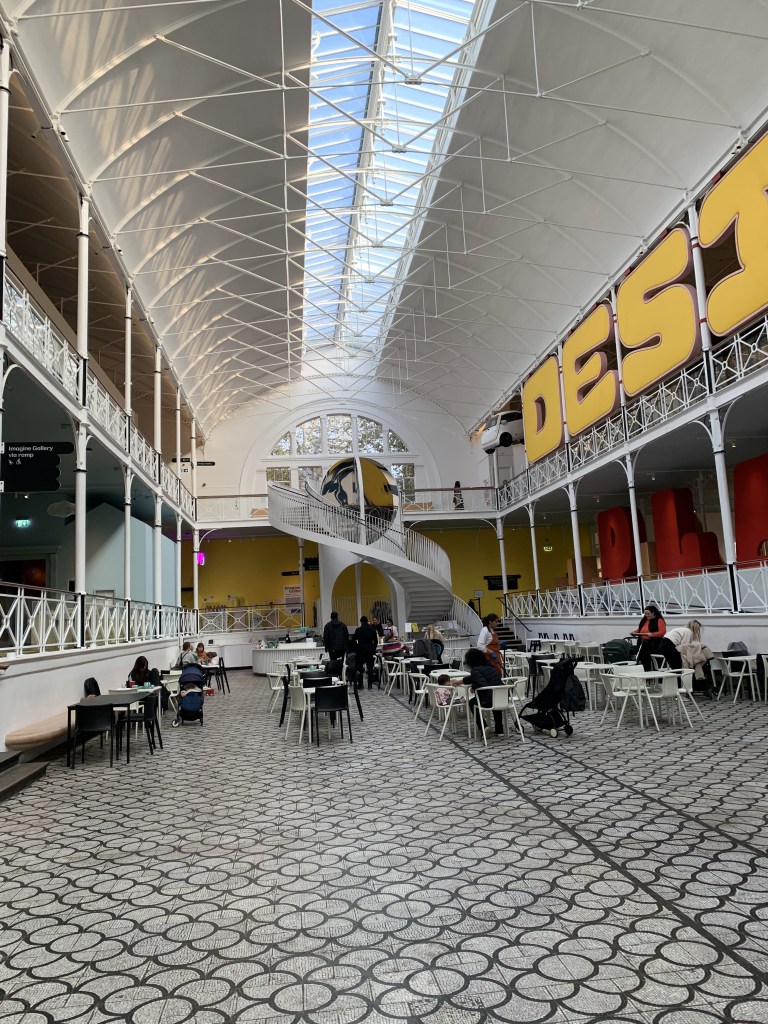
I planned to visit the Young V&A for months now – even before its opening. It opened in July, and I wanted to wait out the opening crowds as well as the summertime busy times. It’s been on my mind since but had other priorities and life happened. Now, however, as I joined the Museum, Games and Play Summit (a few weeks behind), literally the first session was from the Young V&A focusing on playing at the museum, and after listening to their amazing approach to their museum I had to visit. It was a gorgeous sunny day and decided to go to Highbury and Islington and walk along the canal to Bethnal Green (very peaceful). I arrived at the museum around 2, a perfect time to avoid crowds. It was busy but due to the smart design of spaces, people spread out so an adult visiting alone could enjoy the museum just the same as a large family, moms and their babies and older adults.
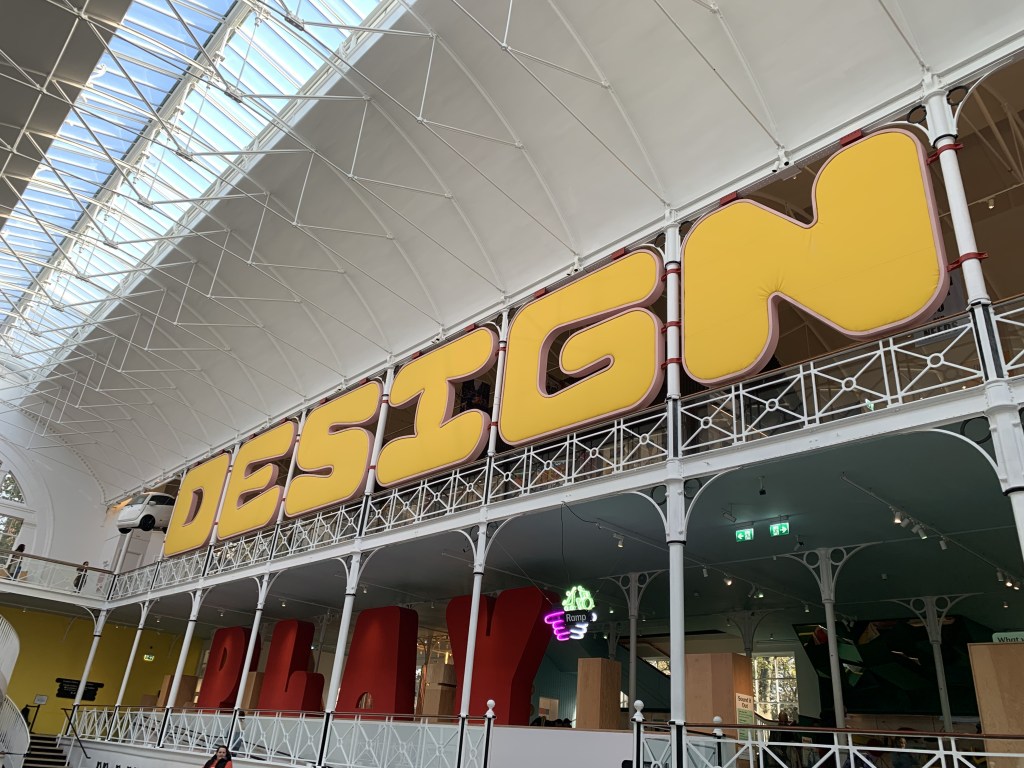
The first thing you see when you go into the museum is the open space, the café, the mirror globe at the top of the stairs on the other side, and the use of colours in separating the different areas and themes. Everything is labelled and pointed towards areas – supporting your visit and navigating the space. There was no ‘start here’ and ‘continue here’, it felt inviting and welcoming, and you could just start anywhere and go in your own flow.
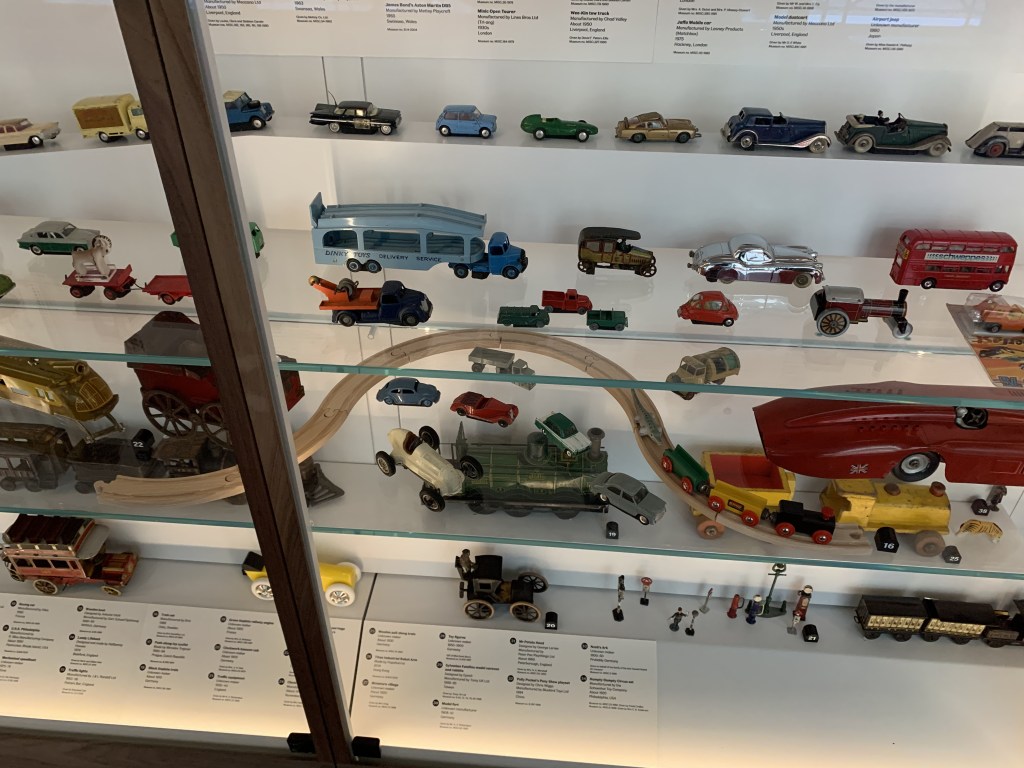
I started at the Imagine area welcomed by a sign telling me what gallery I am at, and a prompt on imagination. The area was designed with 5–11-year-olds in mind, while also supporting intergenerational interest and conversations. The first thing I noticed at the first display was their Barbie dolls, Sylvanian families, Polly pocket, Army men and matchbox cars arrangement. Then I started finding the labels and reading up on the different toys displayed all with the theme of imaginative play.
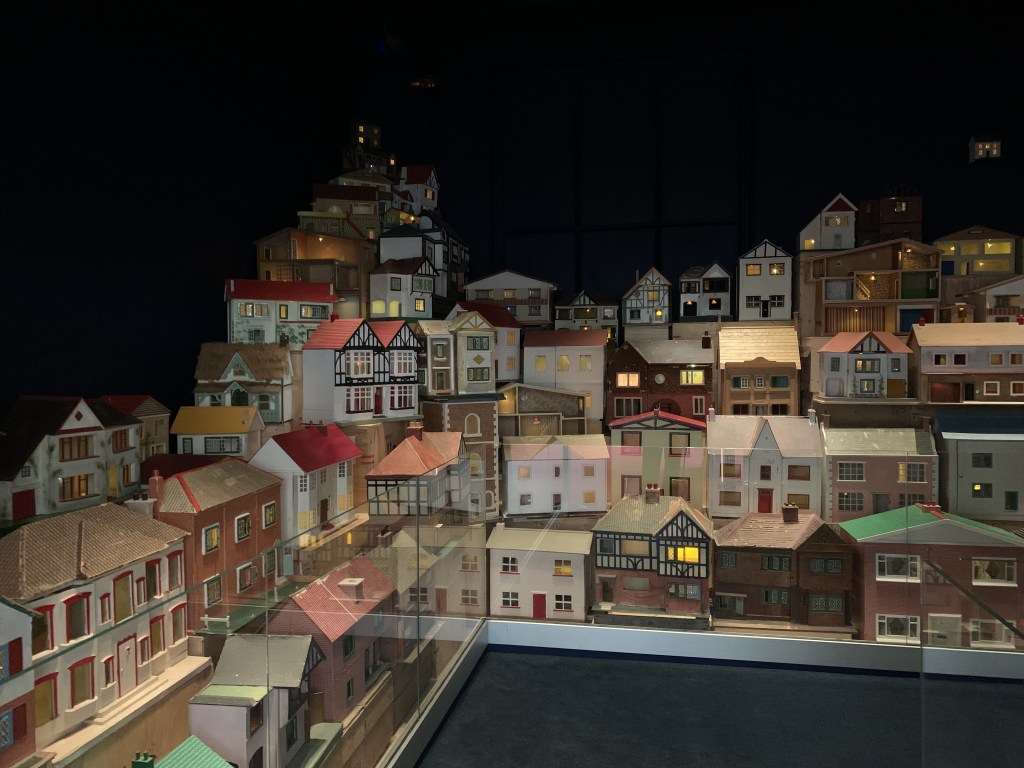
The next gallery (which was like a dream from a Disney movie scene) an installation of over 100 dolls’ houses assembled in a mismatched style, lit from within and displayed against a dark room suggesting nighttime. It was a gorgeous entry into ‘imagination’. You could listen to the artist explaining her work, but you could also just wander around and peek into different little houses and see all the different styles.
The next gallery was very smartly arranged – it had a traditional museum gallery feel – with paintings, objects and cases but arranged by questions of ‘Where are you going to go’, ‘Who are you going to meet’ and ‘What are you taking with you’. It created a story just by the arrangement and the questions. Then in the middle, you were invited to create and tell your story with the help of a ‘machine’ giving you more ideas and a microphone. There were small cases in the middle showing you a drawing sequence of a story and the objects that they involved. On the side of the room, large cases were supporting the questions with various collection objects ranging from old, exotic, local, fancy, new, cheap, and everyday life. Everyone could pick out some favourites, something they recognise and something that they know what it is for but have never seen from that culture. The objects, paintings and cases were placed at different heights supporting different needs. There was also a great combination of digital and physical interactives (turning the wheel, speaking into a microphone, old-fashioned looking timer tracking how many stories were being told on the day). Great engagement-focused room – I absolutely loved it.
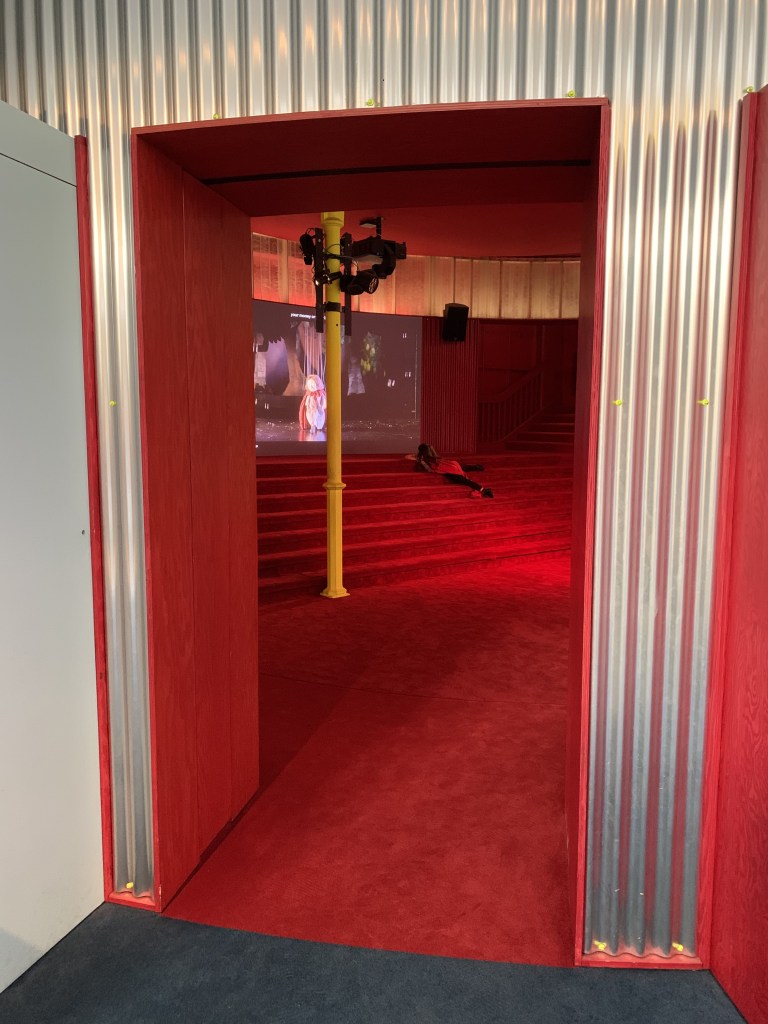
Following from the ‘story room’, you entered a theatre set up, where children could dress up, but also you can watch theatre plays and there are objects around the room on the theme of ‘performance’.

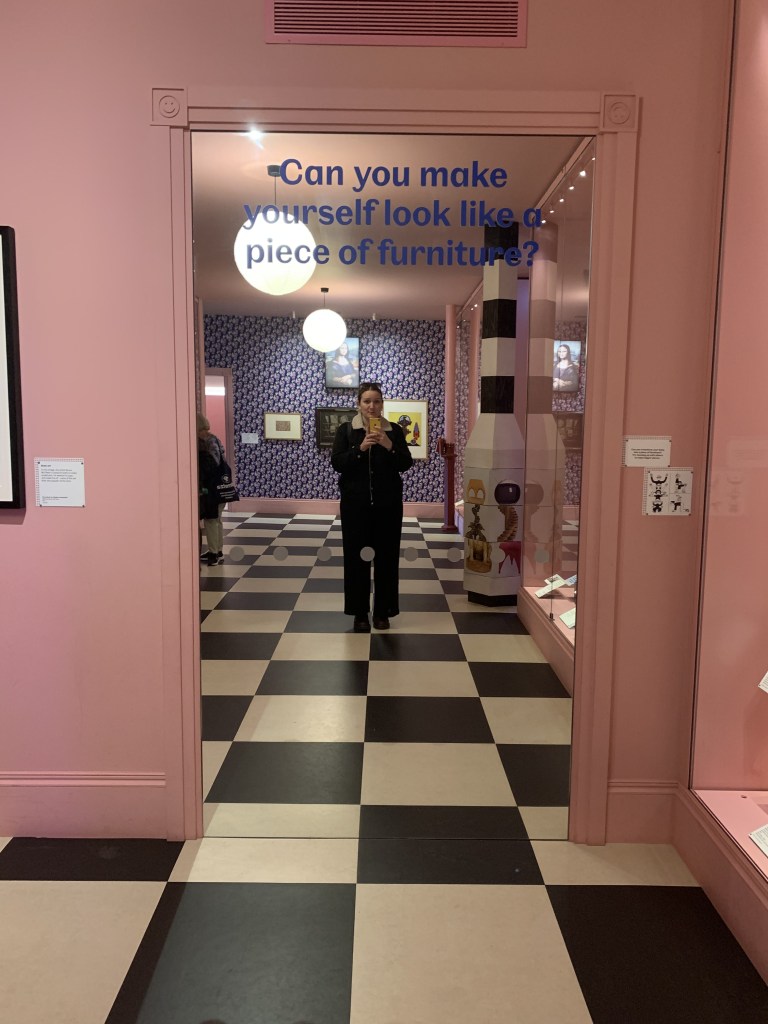
The most popular (while also the fastest passed area) was the shadow wall where you can make figures with your hands – adults loved that. The next room was the ‘home’ area – ‘imagine who lives here’, ‘what do you think they do for a living’ mindset, again, encouraging you to tell a story. It is supported by a street (great texture and feel) and dolls’ houses old and new with characters. The next few rooms were about furniture and design and the optical illusion room which were colourful, full of imagination, engagement and fun. Hearing the furniture interact was well made and fun for all ages (maybe because of the old red phones and interpretations setting it up for you. The last room of the area was about ‘You’ supported by self-portrait paintings, pictures of children doing various activities, clothes and toys indicating personality and individuality and a do-your-own self-portrait interactive (digital and physical) with 2 spaces supporting social interaction.
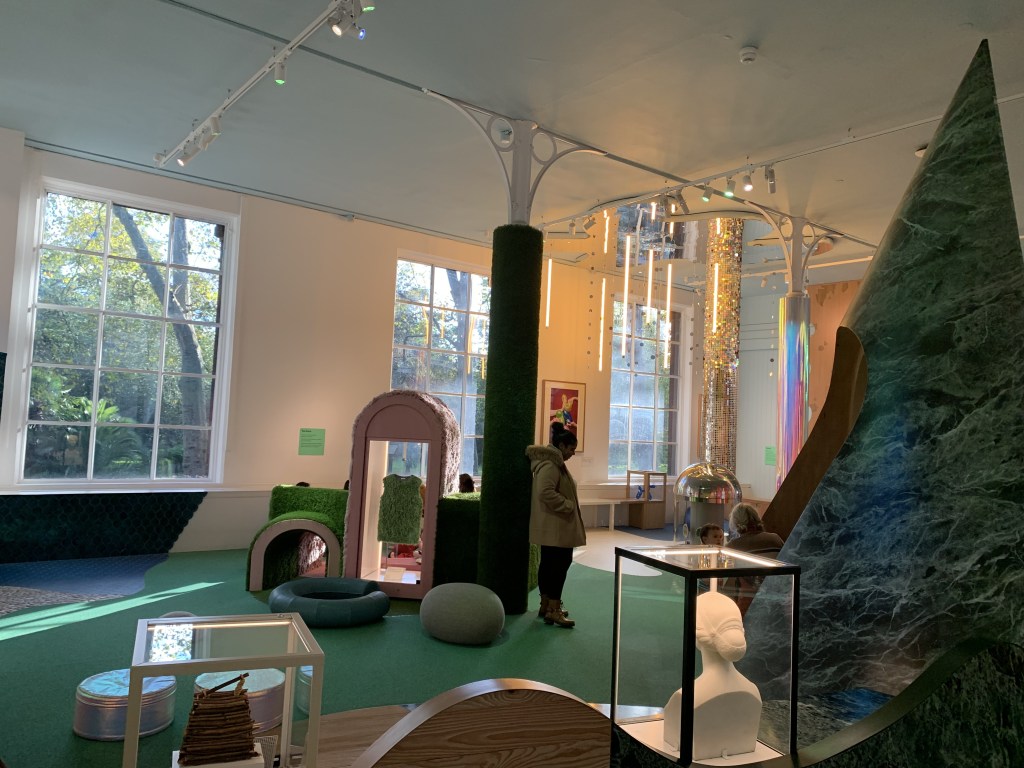
As you walk across to the other side you start with the Play area and the Mini Museum – for babies and toddlers, a sensory learning area which encourages play (twist it, sound it). It is a textural landscape with gorgeous colours, airy and bright as well as closed off (only allows a certain age range) so safe to explore. Outside of that area is dedicated to learning colours and letters (supported by the collection and amazing interpretations). It is a fun way to fill in a hallway-style area as it leads to the other play section.
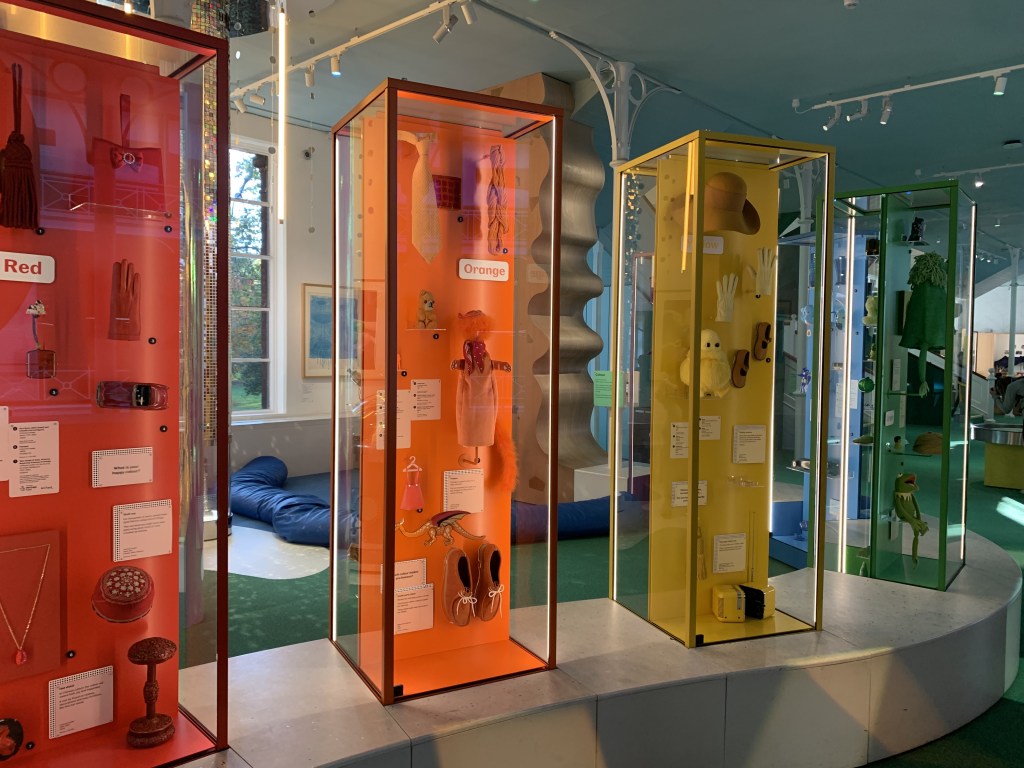
This area organises objects based on play theory and theorists and the objects range again from old to new. Great for adults and older children for learning. Then another play area – walled but not closed off, where children can build with big blue blocks surrounded by other building block objects to inspire. The Play section ends with a wordplay cabinet I absolutely loved and could only manage a few of the words. It uses items for the collection and a puzzle game people of all ages tend to like.
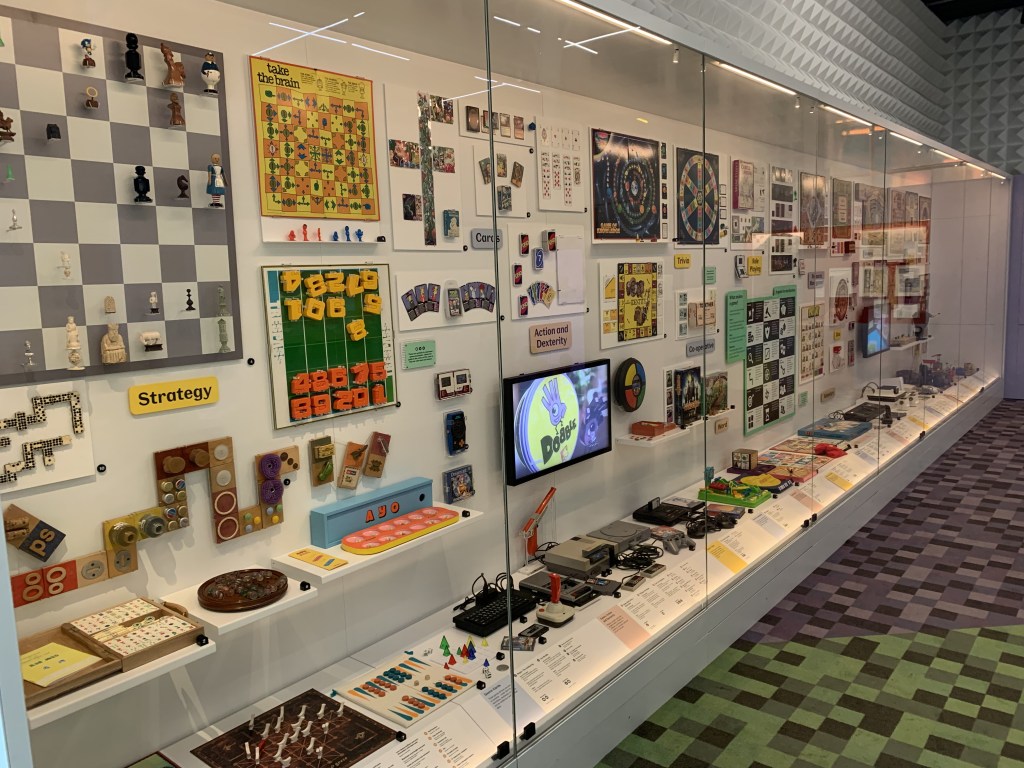
The area ends (or starts) with the game room (featuring gamification) talking about different games ranging from boardgames, consoles, cards etc., video games (screens), and do your own boardgames (offering elements of games with it). It offers games both old and new, physical, and digital, boardgames organised by their theme, strategies, and designs. It is meant to challenge assumptions on video games by showcasing game mechanics, designs, and learning opportunities. On the screens, you can try Minecraft (museum edition), Bitsy, and Monument Valley. The design-and-play game interactive supports creativity, social engagement, connection, reminiscing, and intergeneration engagement, empowering children to become creators and learn while having fun. The Play area is meant to be playful, aimed at 0–5-year-olds as well as 10+ year olds and emphasises play as key for learning. It was 100% fun for an adult as well.
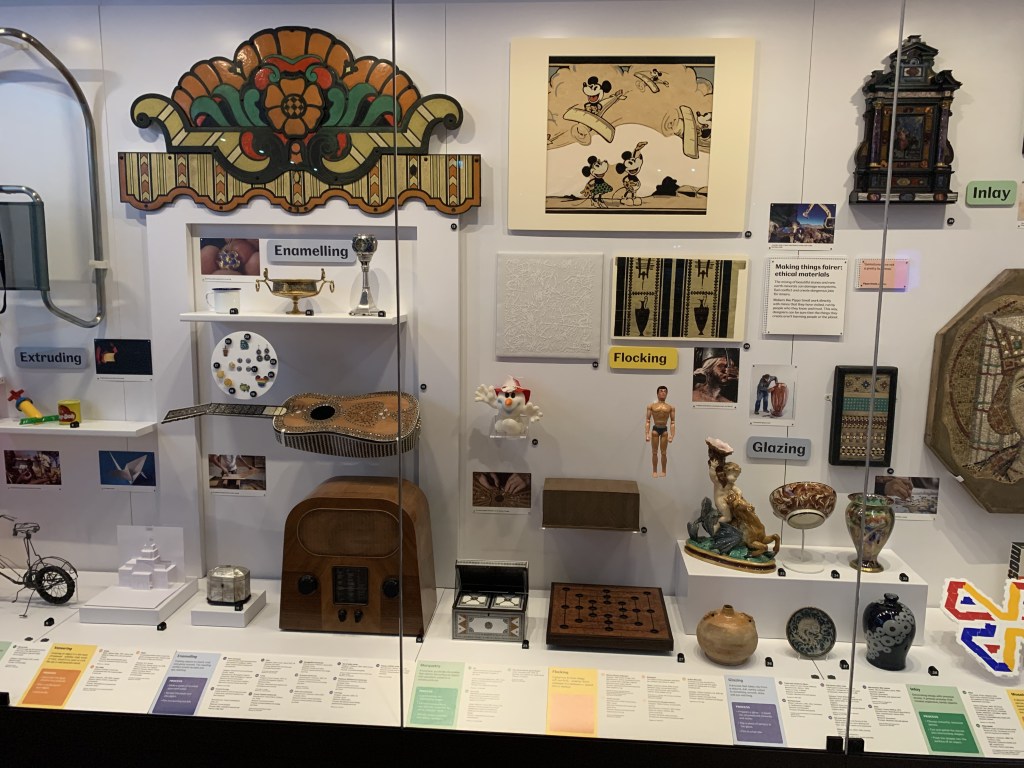
The Design area is aimed at 10+ year olds but arranged in a way to intrigue younger children as well. Great fit for adults too, it was very interesting and insightful. Cases focus on different people and themes which adds a personal element as well as representation and inclusiveness. There are cases featuring sustainability (great explanation and fun illustrations), fun designs from around the world and design and needs. All the displays feature both local and global examples highlighting the museum and its collection as a local museum in a global context. There is an ‘art studio’ area where you can see materials around you, but the main feature is the design tables with different prompts on them to invite you to design and have fun.Then Design transforms into galleries (like other museums) showcasing designs arranged by techniques. Amazing interpretations and interactives, engage you more than just showing objects. This area ends with the best part where they show children’s design projects with personal stories, processes, and the end products. Loved this!
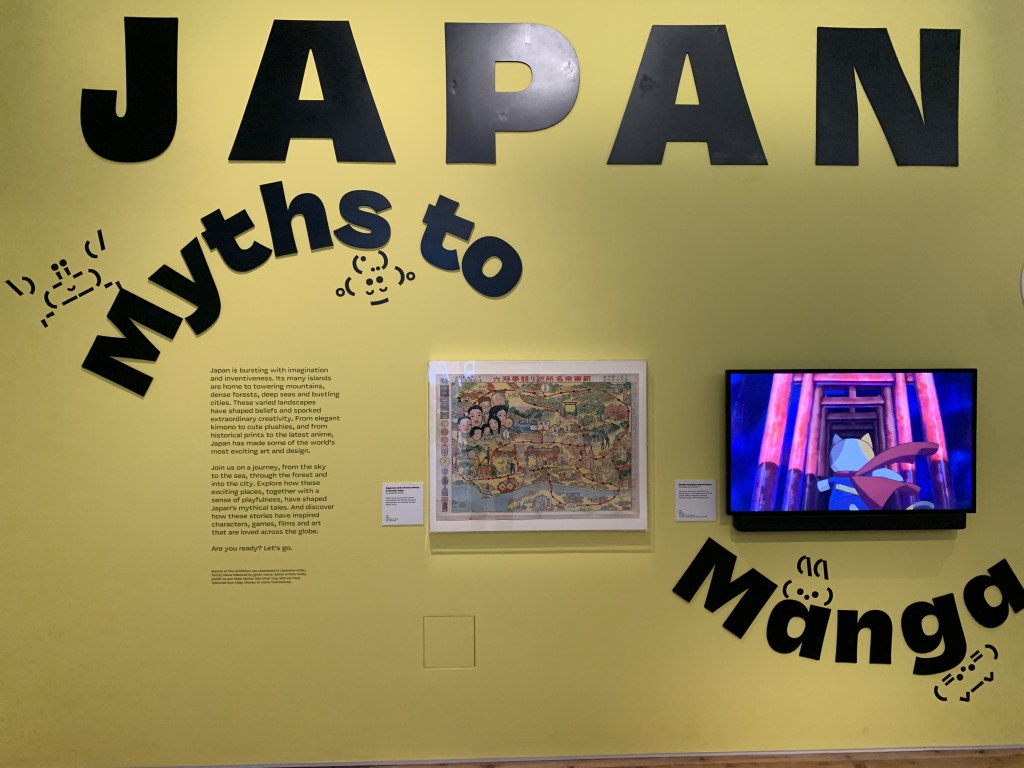
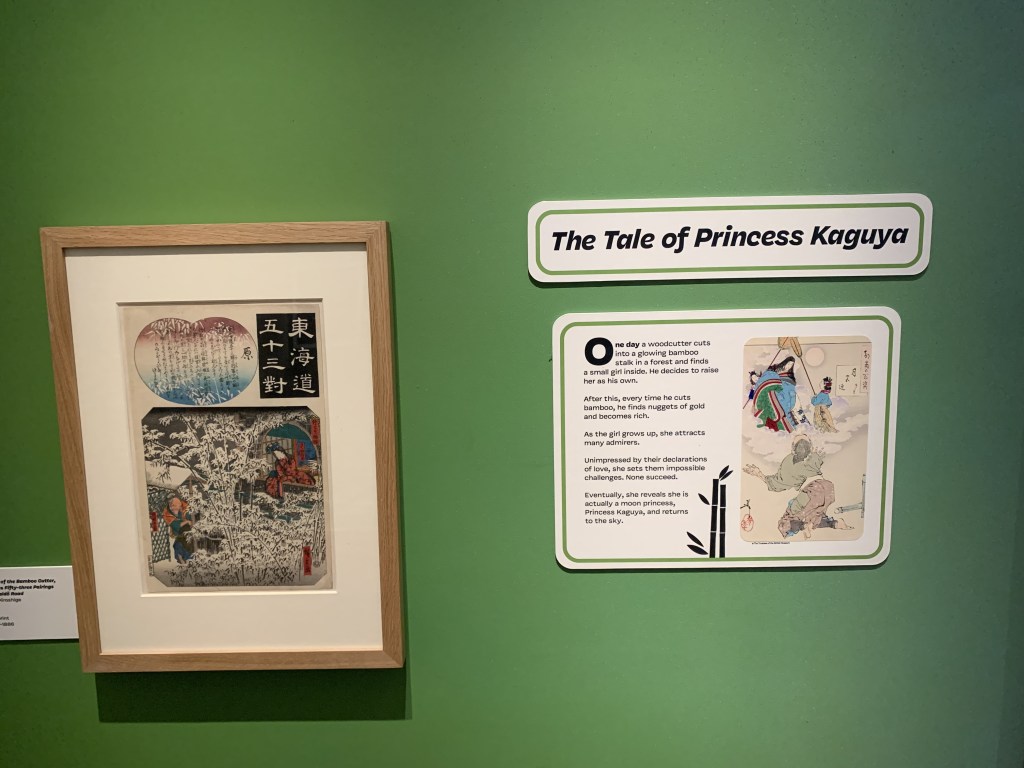
I also visited the special exhibition: Japan – Myths to Manga. Luckily, due to my Museum Association membership, I could visit the exhibition for free. The exhibition focused on landscapes, myths, toys, games, and art organised as a journey offering a great flow. The main themes were sun, moon, sea, forest, city, and home. The exhibition used beautiful colours to indicate the themes but also had colourful objects which created a vibrant space. It featured a mix of digital, art, old and new objects, stories and facts. I absolutely loved reading the short myths and seeing the objects relating to these old folktales.
The Museum’s (which used to be the Museum of Childhood) aim was to transform the museum to showcase creativity and play rather than just a space for and of children. They incorporated play theory in their design, curating and engagement as well as reflect on them so visitors can learn more about it. For me, this feels like transparency as they are true to their mission. They are playful with their space and their collection, which comes through the minute you step inside. You can see their inclusive and accessible mindset with their design that aims to engage with different ages while being intergenerational and educational. The Museum offers learning through doing, experimenting, and having fun as well as creative play (fun and needed for us all). I can imagine going back myself but can definitely see it for families having a welcoming cultural space, which is great for playing, learning and socialising.
The Young V&A is inclusive and accessible in design. There is a great open space in the middle where the café is (full of sturdy furniture, highchairs and space for children to run around), there are ramps and lifts to support movement around the museum for all, and no strict walls creating an open space. It feels safe to let go of children but while being aware of what they are doing and where they are at all times. It is free to enter the museum which offers accessibility for a lot of people (great experience, fun and play which often costs a lot of money for the family). The website offers great accessibility help and preparation for a visit to all (they are detailed and descriptive) and offer a great range of accessibility on site. I felt welcomed, it wasn’t too crowded or too loud with children, I could focus, and there was good natural light and plenty of space around; all these helped me not to feel exhausted after the visit, which often is the case.
I would highly recommend visiting the Young V&A for any age. I’m sure I will go back again and again, loved the playfulness and open atmosphere of the museum. It was a breath of fresh air during my many stressful and anxiety-filled days to just be there and have fun.
 Hugs and Buttons