Sophie Frost Interview
I spoke to Dr Sophie Frost – Consultant, researcher, podcaster, and writer – about her interests, her career path, One by One (An AHRC funded multi-year research initiative helping build digital confidence in the international museum sector, led by University of Leicester), and her podcasts. She also offered many useful advice to me and to people starting at the museum/arts sector. I heard of Sophie during my Digital Specialism course during my Museum Studies Masters at Leicester and found her ‘People. Change. Museum.’ during the pandemic, which I listened to obsessively while doing my health walks. I have been a fan since! I hope this conversation will help other emerging museum professionals too. Find out more about Sophie and her work.
Find some wisdom/advice in bold in the conversation that I found particularly relevant or important!
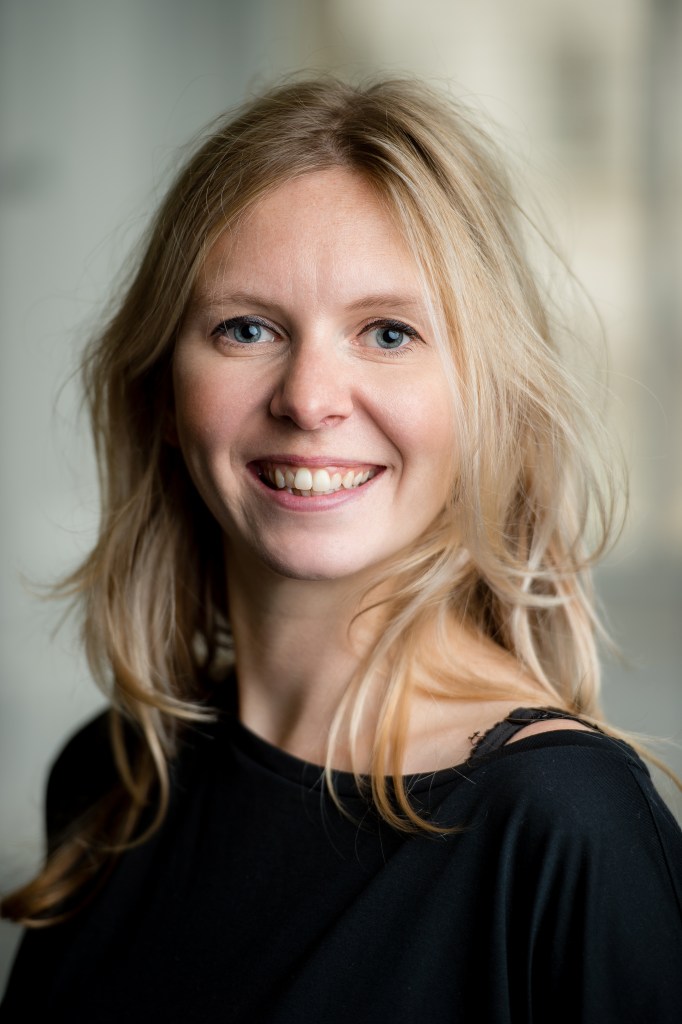
Sara – Hi Sophie. Thank you for agreeing to chat with me. I am a fan of yours, I listened to your ‘People. Change. Museums.’ podcast and loved every minute of it. I also saw you on an MA Conference session recording talking about digital confidence. I have been watching a lot of COVID times conferences and the main message I got from them is to create something quality rather than quantity; your podcast was one of those quality resources, for me the least!
Sophie – Thank you. That’s so nice to hear. I got contacted a lot afterwards by other museums to see if I would profile them. I feel like we were on to something but because the project ended, we did this piece as a complete work. It’s six episodes.
What about you? When did you finish your MA?
In 2020, just when the pandemic hit. I did my placement online, digital specialism half online, half in person, and then graduated last January. We had Ross Parry for digital and we had some interesting conversations. I loved what we were doing. So I used that as one of my goals for my AMA to become digitally more confident. I linked it with games just because I’m interested in games and boardgames. I’m trying to meet people who are doing anything digital and because of the podcast and One by One, I was really eager to speak with you.
That’s good. So where are you working at the moment? What are you thinking about the future? PhD?
I’m at the Museum of Brands in London. No digital at all. I just started in the museum sector, this is my first year at a museum. I am a Community Development Assistant and I’m working with people living with dementia, so mostly reminiscing and health care in museums. I’m still doing my AMA, just because this is not necessarily where I want to be. But I love how much I learned and I want to do more. I’m not thinking of a PhD, I feel that I need actual museum experience and we’ll see later in life.
I feel like the arts and humanities are one of the only disciplines where the longer you leave it to do your PhD, the better and richer the experiences. I always felt that I wanted to have a lot more life experience before I did my PhD. I’m not sure if I really did in the end, but that’s because I got restless. So tell me about your AMA, what are your goals?
My main goals are learning, digital and games, and being inclusive. They fit together great and my current role supports this learning as well.
That’s great. In my most radical thinking moments, I always think that digital can be the tool for enabling true equity on all those counts. The way we often talk about it in the sector is that digital is one thing and practices of wellbeing, healthcare, and social justice are other forms of equity. I don’t agree with that, I think digital is completely interlinked with those other agendas. That’s the toolkit by which we’re going to enable those things and address social issues.
That’s one of the main things we learned during our Digital Specialism is that digital is not just technology, it’s a whole mindset. You don’t have to be technological to be doing those practices that are very inclusive and interactive. That’s why I would love to do games – it’s interactive, it can be for children and learning as well as inclusive practice.
From our chat, I am hoping to learn more about your career journey, how you got where you are and what advice you have for us just starting. There are so many different ways to get into the sector, but it’s not easy and it’s disheartening so I just want to talk to people about their different experiences and the amazing things they achieved. I originally heard of you through our Specialism when Lauren Vargas, your colleague at One by One gave us a virtual class on digital ideas and skillsets.
Has One by One ended? You were quite a big part of that.
One by One ended in July, yes. We had three iterations of it. I joined in the first iteration and I stayed right through with Lauren who you met, through to the third. Our funding ended in July. It had done what it set out to do and it was really interesting with so many new ideas for me around digital and emotional labour, digital equity and thinking holistically about digital for the future of museums, culture and heritage. Ross has now started his new institute for digital culture, where I am now an honorary Research Fellow. We’re making a new podcast series centering the Institute for Digital Culture as an interdisciplinary space, where digital in all its forms in relation to our cultures is discussed. One by One finished and all of us have just learnt loads and we’ve all gone slightly in different directions now.
Were all iterations at different museums?
Yes. I joined in 2019 as a digital fellow. I was embedded at the Royal Pavilion & Museums Brighton and Hove, which is now called Brighton and Hove Museums. I was one of five digital fellows all employed by One by One in the School of Museum Studies to be embedded in different museums across the UK. The big umbrella term of the project was helping to build digital confidence in museums. They were all large, relatively well-funded, national museums, and they all had different needs around digital transformation. The need I met at the Royal Pavilion & Museums was around digital storytelling and the workforce. When I look back at it now, it was pre-pandemic, a much more innocent time to think about digital confidence in museums. There was a lot of anxiety among the workforce (part-time, full-time and volunteers), particularly about social media, and how it was the face and voice of the institution. There was quite a lot of scepticism, they had their fingers burned by a few really unfortunate things that had happened with social media not being used very well by the museum service at that time and people not having very strong skill sets in that area. So, I was asked to come in and explore what the possibilities were for digital storytelling amongst the workforce. I did it by creating my first podcast for One by One, which was called Voices of the Royal Pavilion & Museums. It was a workforce-led podcast; it was enabling the workforce through a really simple piece of tech. I really liked the idea that we were flattening the hierarchy of the institution. So you’ve got a volunteer of 25 years who’s got amazing off-the-wall experience of what goes on at the museum, next to the chief executive. I like the idea that podcasts democratise voices in a phenomenon. I also facilitated the creation of a consensus-led social media blueprint for the Royal Pavilion & Museums. Through the research process, I managed to create a reflective space internally where the workforce could all share their true feelings when it came to social media. We did a series of workshops and at the end of it, we wrote a social media manifesto for the museum as it went into trust. It was a really interesting time because the Royal Pavilion & Museums were Council-led and were transitioning into an independent trust. Council led cultural organisations are often problematic because they are very specific cultural organisations in their own right and if they’re run by the council, they’re often shackled to lots of infrastructure and bureaucracy that’s not very useful or agile. But then, that project ended and there was a lot of funding for digital in the arts because of this huge question still around of how we can sustainably, profitably, and ecologically, use digital to support and enable the future of the arts.
It was only after I finished my PhD when I was looking for funding that I realised that all the money is in digital transformation work within the cultural sector. And that’s how I got in; I became interested in it because for me digital technology is change and I’m really interested in change and how we’re modelling change. I’m interested in how change happens and it seems to be mainly through technology. One by One then got another round of funding and this time we were embedded with the Smithsonian in the States with four of their units (museums). The Smithsonian has 19 museum units. We were working with the National Air and Space Museum, the American Women’s History Initiative, Cooper Hewitt Design Museum, and Smithsonian American Art Museum. We got that funding and the project started in February 2020. Lauren and I were excited to do loads of embedded ethnographic research in New York, but then it all got cancelled. We had to quickly rethink what that project looked like. This iteration of One by One was going to focus on digital leadership in museums with the main question of what it takes to be a digital leader in a museum. We were going to work with those four units to figure that out and we had to quickly rethink what we were going to do and move online.
Lauren, did lots of really fascinating work using all her business methodologies and agile techniques and asynchronous working to do lots of workshopping around all different ways of thinking about digital processes. And I was thinking, this is a really important moment to understand and thought that we need to capture this moment. All the conversations we were having in those workshops that Lauren was running were around the unprecedented that was happening on multiple levels in terms of the challenges and the transitions we were faced with, as a result of the pandemic. Particularly in the States because of all the Civil Rights events that kicked off in 2020. The head of the Smithsonian, Lonnie Bunch said that ‘we’re facing two pandemics, one is the pandemic of racism the other is the COVID pandemic’. It struck me that I could use the podcast medium to do a nice piece of critical analysis of what this moment meant, and the result of that. I used them as a launchpad to capture as many different voices in that story and make it as transatlantic as possible. So while I use a lot of Smithsonian voices, I became most interested in those on the margins of museum work.
There’s so much love to work in this sector because there’s so little money. So you have to be in it for other reasons than just ‘it’s a job’; it’s just not a job for any of us that work in the sector.
For the third iteration of One by One I chose to be embedded with the Science Museum group. I felt after ‘People. Change. Museums.’ and after understanding this shifting sands of a moment, I really wanted to understand all the different forms of digital labour. I wanted to understand what they looked like as we were coming out of the pandemic and buildings were reopening; how so many new jobs had evolved around digital in that time and also how digital work was repeating and reiterating certain practices like unequal practices within museum settings, particularly around precarious work. People on short-term contracts, gendered work – a lot of the technical jobs were undertaken by women and young women of a certain age who were always going to move on and who were easily replaceable, which is terrible, but I wanted to do more research on that. I wanted to find a big UK cultural institution that would enable me to ask lots of different difficult questions over a year. And luckily, I managed to persuade the Science Museum group to let me do that. The result of that was the ‘Hidden Constellation’, which is my latest podcast. It’s a different type of story. The idea of the Hidden Constellation came out of the idea that there is a hidden constellation of labour that happens in a museum solely to do with digital. I was trying to map an alternative set of practices in the museum, which were specifically digital museum practices.
So, you were working on these iterations for One by One but you were researching and publishing what you found?
So I got a PhD in Visual Culture in 2016 from the University of Aberdeen. And since that time I have this tripartite career profile, which is made up of research, cultural practice and working in big cultural institutions and teaching (always on practice-led programs). Some of the courses I’ve worked on were BA Arts Management at Goldsmiths, MA Education, Arts and Cultural settings at King’s College and BA Arts and Festival Management at De Montfort Uni. I’m really interested in having a career that sits between those three areas of research, teaching and the arts. I find it exciting and feel like this is what I like to think a 21st-century feminist academic looks like; someone who’s trying to cut across those different environments to inform exciting futures for everyone and that are relevant to the sector. I feel like I couldn’t if I was just sitting in academia or if I was just working in a cultural organisation. So that’s what I’ve always done, all the One by One projects were part-time as I was always doing multiple other jobs that were informing a lot of the ways I was talking about ideas at One by One, just like One by One always informed all the other jobs I’m doing.
And you’re doing that as a freelancer? How do you manage to do this triangle focus?
It’s a mixture of freelance and a mixture of contracted work. So I’ve just started a new contract with the University of Nottingham and they’ll pay me two days a week for that for the next eight months. But meanwhile, I’m working freelance for Culture 24 as an Associate in a Curatorial Digital Leadership program, and they pay me freelance for that. I just kind of have to patch it together. It’s a bit addictive when you’ve done it for a couple of years. It means you’ve got more freedom.
It sounds incredible and very interesting. But it sounds hard to manage time-wise. How do you even measure your time, your skills and what to prioritise?
Yeah, I know what you mean. It takes a lot of time to figure it out. I think as a woman in this field, you have to get better at talking about money at the start. It helped me that I got female friends from the corporate world, to get advice from and to show me how to do this for myself. I’m feeling lucky, but also I worked hard, working multiple jobs for 12-13 years. My advice to people starting out in the sector is to think strategically about every job, no matter how bad it is. Instead of thinking I don’t want to do this, think but what can I observe and who can I meet? That is the way in. For me, it helped me speak multiple languages in the arts (different cultural environments). I feel the more exposure you can have to work in those roles, the more equipped you are for the next job.
I think what I need to say to you, that doesn’t get said enough, is that I can do this at the moment because I haven’t got dependents yet – there are lots of things like having kids that I haven’t done. I worked all the time, nights and weekends. This comes back to that you have to love what you do and be really fascinated by it for it to give you a drive. I’m not sure I’d recommend this way of life, as much as it just made sense to me. It makes me happy.
I have a question relating to this, what’s the line between doing a job and maintaining your mental health and the line before you burn out even if you love it?
I’m going through that right now and picking myself back again. I love my job and I was doing it 120% full on but how to do this healthily? What advice would you have on that balance?
Yeah, I think it’s really important. I had a lot of my own versions of mental health complexities, we all have I think. On a really basic level, I build activities into my daily schedule which are mindful activities. I try to have as many things that make me happy and incorporate them into my days. I also think I accepted that life is hard and it’s up and down, and not to wait and work for something to be happy like a promotion or end of a project but to dedicate time to being happy every day. I know it’s such a cliche, but your vulnerability is your strength. I had some good and not-so-good mentors, but I always made it a point to share my vulnerabilities with my bosses. Being very honest and not bottling in anything. This is part of my research as well – emotional labour. It is really important to me.
I try consistently to check in with myself to share where I am with who I work with.
I think for me it was that I couldn’t put my job down. I don’t know if you worked in hospitality but you are busy all day, do your best and then you go home and don’t care after. Yes, a comment might affect you or a lovely customer might be positive but when you go home you have your life. And it’s slightly different from what I’ve been experiencing with museums and the art sector. You can’t, you care. I’m an outreach person and I’m working with people, so that might be another step even further out, but you can’t not care and I just couldn’t stop thinking about work and people.
I totally hear you. I’m quite a big fan of only bringing 90% of yourself to work and leaving 10% at home and just sometimes being ruthless about that. I think there’s a real culture in the arts of just offloading everything on each other, there’s never enough time and I think you have to somehow carve out a bit of attitude and say no in the nicest way possible.
All of this is about value, how we are valued by the institution we work for and how we value ourselves. And ultimately, museums, however great, altruistic, and fantastic they are, don’t truly value their workforces in the way they should. As a result, for me, I just accept that now I’m only bringing 90% and they are lucky to get 90% out of me. And the rest of the time I’m going to do the things I want to do. It’s taken me a long time to get there. It feels arrogant when I think about that, but it’s also self-preservation.
I get it when you are starting out and you’re made to feel grateful for having a job in the first place in that sector. It’s overwhelming. So work on preserving yourself! Whatever job I’m in, however happy I am in it, I just keep looking around for the next opportunity. And this is something quite new to me because normally I feel like I pledged allegiance to whoever I’m working with. But I’ve realised that they won’t value that. Until we create a sector which we are going to, but we haven’t yet, until we do I just feel like they’ll happily exploit you. So you exploit them. Take what you get from the job you’ve got until you get the next one that’s better somewhere else. And that’s how I operate now.
Nothing prepares you for it; not your MA or your PhD prepare you for it. No one prepares you actually for how the sector will work and behave. Once you’ve got a secure job there, you perpetuate the inequality and the difficulty of letting new people come in because there are not enough permanent, well-paid jobs to go around. I just really think you have to try and play the system to your advantage as much as you can.
Can I ask how you got to where you are now? Career, studies etc.
When I finished my A levels I did an Art Foundation because I thought I wanted to be a fashion designer. I’ve always been interested in art; in the power of art in society and was always very big on art and politics, art being political. And I did the Foundation, and I realised that I was not great at doing fashion but also that I loved reading and writing about art too much. Then, I went to Leeds and I did a BA in Art History and English literature then I spent a study abroad year in Copenhagen and I did film and art history, it was the only English-speaking subjects I could do. The year I was in Denmark, there was a huge social movement – a group of young people uprising in the city of Copenhagen because they were knocking down an extremely historic youth building, it was called Youth House – or Ungdomhuset. It had been quite a political space and then it had become a gig venue. In the 80s and 90s, it got very druggie and the government decided to clean it up and sold it to a far right-wing Christian sect who decided to knock it down and start again to build a church. And the reason I tell you is because I was so inspired by the art that took place in the streets that year. Young people took to the streets and did huge performance art pieces, painted all street furniture pink, and changed all the street signs to the address of the building. After witnessing this, I came back and I was totally mobilised. I wanted to understand the relationship between art and society and how art can change the world. I mean, I was completely beholden to it as an idea. And so I did another year at Leeds, and then I did Contemporary Art Theory at Goldsmiths. I was very lucky to get in, it’s an amazing master’s program. I knew at the end of Goldsmiths that I wanted to do a PhD. But I felt like I needed to get some life experience. And by this point, it was 2008, the financial crash happened, and I decided to become a curator for a bit. At the time no one had told me that you can’t just walk out and get a great arts job and I couldn’t get any work. I applied for absolutely every art job going and, luckily, during my MA, I’d been working at the Southbank Centre in London as a Steward. I got that job because I’ve done a lot of bar work throughout my degree, I’ve been a bar manager. I managed to get my first arts job through catering. And so there I was a Steward in the Royal Festival Hall. So I was right in the heart of this amazing London venue. And luckily, they had an Assistant Manager job going for Front of House at the Royal Festival Hall and I got it. And before I knew it, two years had gone by and I’d become a venue manager in the Royal Festival Hall. It wasn’t what I wanted to do, it was so uncreative. It was facilitating all this amazing outreach, participation work, creative learning work, huge, vibrant cultural festivals, but I was always the one telling the security guards where to position themselves and dealing with the bomb scare etc which is all great experience, but not what I wanted to do. I became really unhappy, the hours were killer, it was all the nights and weekends. It was then that I decided to do a PhD; I wanted to really understand art and society properly. So I started looking around for PhDs, and there was a funded one in Aberdeen and because I knew I couldn’t pay to do a PhD, especially in London, I decided to move to Aberdeen and do a PhD in Visual Culture. I got up there and I thought that I want to do something about art and business or how art can change business and make it more ethical. And luckily my supervisor gave me a lot of time to learn and read. But I also didn’t have any money and I needed to get a job pretty quickly. I got a job as a duty manager at the local art cinema where I did programming, which was quite a good experience. Janet, my PhD supervisor, said to me that I should focus on what I know for my thesis. I knew a lot about what it was really like working in the arts, how non-creative, non-participatory it can be to work in big public cultural institutions. And she said you should write your PhD about that. So I moved back to London. My mum was very ill as well again at that time, so I moved back to London and I started working at Southbank again as a duty manager. And I decided to write my PhD about creativity and participation in a big cultural institution. And I managed to persuade Southbank to give me access to interviewing everyone from security to the artistic director about the role of creativity and participation in the job that they did. It was a really interesting time to do an ethnographic study of Southbank Centre. What I ended up finding out was that big public cultural organisations are hugely hierarchical, and extremely siloed in terms of who can be creative. It was really interesting and that’s mainly what I followed ever since with any opportunities to work whether in academia, in research, teaching or in arts with people who I think are doing risk-taking and challenging things or where I can make a bit of a difference. So I’ve just played to my strengths depending on what someone’s needed in a role.
I think I’m a bit addicted to the buzz of working in an arts environment, I never want to leave it, so I’ve always tried to work for art events, like festivals. I did a lot of work for the British Film Institute for the London Film Festival. It’s really important for me to stay close to the arts when I’m doing research and teaching to keep being in that environment. It just reminds me why it’s worth the anticipation and that’s how I’ve ended up where I am. I’m really lucky.
What was the first podcast? How did you come to this medium? You mentioned earlier that you feel it is a great way to democratise voices, but it’s an interesting way you did the podcast of People. Change. Museums. with a mix of interviews and spoken words almost like reading essays, you wrote. How did it start? How did you learn how to and why that medium?
It started with the Voices of the Royal Pavilion Museums. It coincided with podcasts getting massive during the pandemic. I was looking for an alternative form of research output. Normally you write an academic article or a book. And I was interested in creating something that wasn’t behind a paywall, but also where I could capture live research as it was happening and unfolding. And I’ve always found that academic articles take ages. You write them and they go off a peer review. If you’re lucky, you get them back with a few comments that you change and it’s past 18 months before it gets published. And I just didn’t have that kind of time. I thought if we want to understand a modern phenomenon of the emergence of digital technology and digital transformation in the arts, we need a medium that matches the pace of change of the phenomenon. I was really interested in the idea of live capture and how we can make research accessible to those who are participating in it.
Yes, and the people listening to it. If you can’t speak academically, it is not accessible to you, so this offers another way and another language for it.
I thought that was important as I’ve always wanted to help people, the cultural workforce, and they don’t respond terribly well to academic publications. I don’t blame them, it’s not relevant and as we’ve discussed it is extremely challenging to work in the arts sector on many levels. So I was trying to create something relevant for them and I thought this is the way to do that. Another thing I loved about the podcast medium was how playful you can be. You can tell stories in multiple different ways. I’m lucky because I work with Chris, he’s a professional producer, so he could do really cool things that I couldn’t have done myself with editing. But you don’t need it. Podcasts show me that academic research doesn’t need to be serious and it doesn’t need to be dry. It can be really engaging and moving, actually, in an accessible way. So that’s how I got into it. And I think also it gave me a voice that I’d always wanted through my work and hadn’t been able to get from academic writing. I just saw it as the future really.
I’m also interested in this idea of streaming culture, the new patterns of cultural consumption through Netflix and podcasts and how everything has changed the way we consume. Nobody was listening to 10-plus hours of content about museums and technology this time five years ago and I think there’s a new appetite that’s come about with the podcast phenomenon, the way people want to deeply listen and engage with the topic now. I’m doing another one now, which we’re calling ‘The Output’ at the moment because it’s an academic podcast. We’re playing with the idea of outputs. We’ve interviewed all academics in the new Institute for Digital Culture at University of Leicester about why they’re there.
There’s always a way of getting someone’s voice; staying respectful to a participant but also distilling the information to the audience. It just takes a lot of really deep listening.
 Hugs and Buttons