
Roobaroo is a play about family. It questions how growth at any age might pull us in separate and often opposing directions, and yet why does family remain a core unit we keep falling back on? Year after year what keeps motivating us to preserve it, manage it and keep the inter-generational flame alive? Is the search for meaning, connection, support and love from each other doomed by the past, or will there forever be hope in the everyday?
Akshay Sharan (actor and writer) describes his play Roobaroo as thrilling, family focused and drama. He wrote Roobaroo as part of the Big Share, a writing festival that supports early career and underrepresented writers to develop their ideas and further their skills from start to finish of creating a play. This was then produced by the Space production and Mrs C’s collective and hosted at The Space at the Isle of Dogs. The venue itself is amazing; a beautiful old building, a great garden and pub upstairs which gives a friendly and buzzing vibe to the theatre.
I was lucky to be invited to see this play on the 3 August and was amazed by the venue and location (have not been to the Isle of Dogs before) and by the audience. Every seat was taken, there were friend groups, people knew each other and were making new friends before the start of the play. I loved sitting amongst so many friendly, interesting, and kind people, which made me feel welcome in this space. Before the show, Akshay spoke a few words of introduction, and also a dedication to a theatre friend, who passed away recently, whom he dedicated his play to.
The play is about a family: Father (Raj), Mother (Meera), son (Shiv), daughter (Zara), uncle (Dilip) with support from a friend (Mohan – father’s friend and business partner), the grandmother (talked about but not appearing as a character) and a love interest for the son (Andrea).
Find the amazing cast here:
Zara- Aarushi Ganju
Shiv- Sachin Krishna Sharma
Raj- Shiraz Khan
Meera- Subika Anwar
Dilip- Shivi Hotwani
Mohan- Joeravar Sangha
Andrea- Genevieve Sabherwal
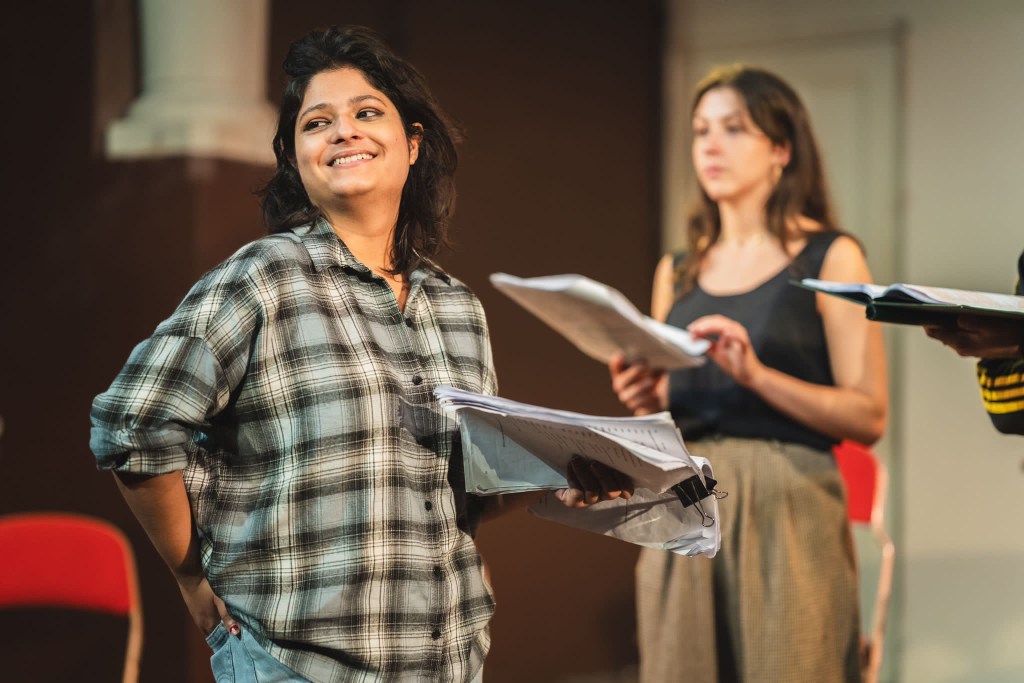
The play follows the family through 6 years, split into parts focusing on milestones (mostly the daughter’s but also the grandmother’s). It was a linear focus throughout the years which made the story easy to follow. Each time a part started in the play there was a narrator describing the location and setting of the scene. The narrator role was kept throughout the play and was rotated by the cast which I really enjoyed. The sound and lighting were brilliant, from the beginning it was on cues, it enhanced and supported the play.
The play was divided into different parts which were separated by voice recordings in Hindi and in English bringing the grandmother into the story more. The parts focused on a milestone event such as Zara going to university, Zara’s graduation, and the grandmother’s declining health. They then showed various dynamics of the family members and consequences of past actions. It was an authentic portrayal of a family – it felt relatable: both warm and painful at times. The monologues and conversations were fast paced, funny and reflective and at times heartbreaking, which made the dynamics feel relatable and real. There were jokes, bickering, fights and deep conversations which are present in all families. The chemistry was great within the cast – sibling bickering (Zara-Shiv relationship), actual resentment and fighting in the mother-uncle relationship (Meera-Dilip) father-daughter (Raj-Zara), mother-daughter (Meera-Zara), as well as insight into the marriage (Meera-Raj). Shiv, the brother, had great scenes and monologues but as he was often ignored as well as struggling it came across as being off with his dynamic with everyone in the family (which for me also felt very real).
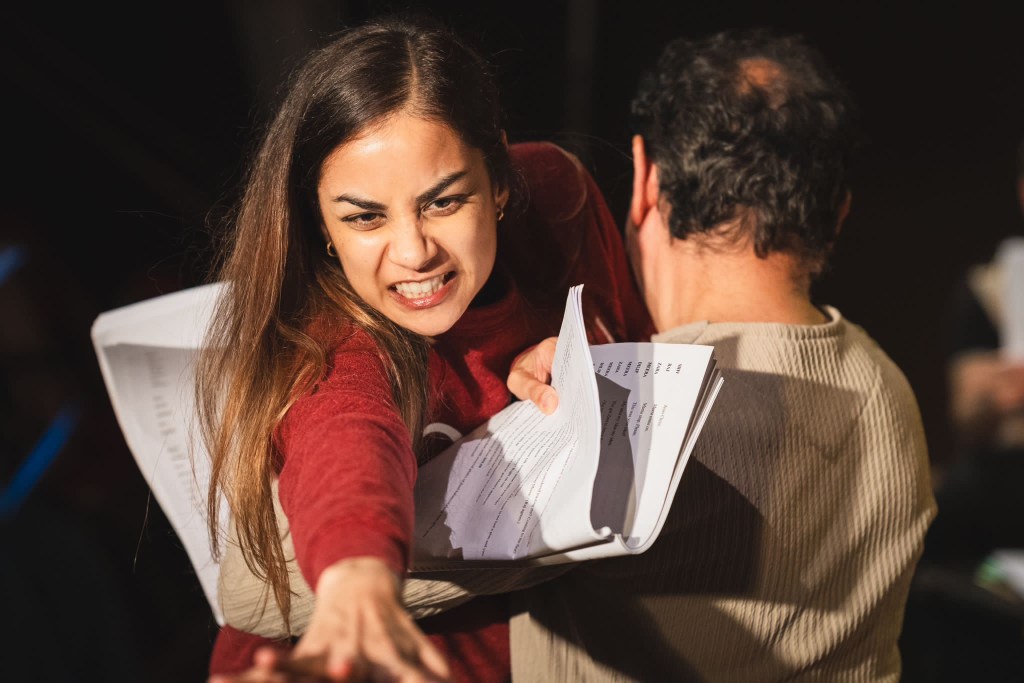
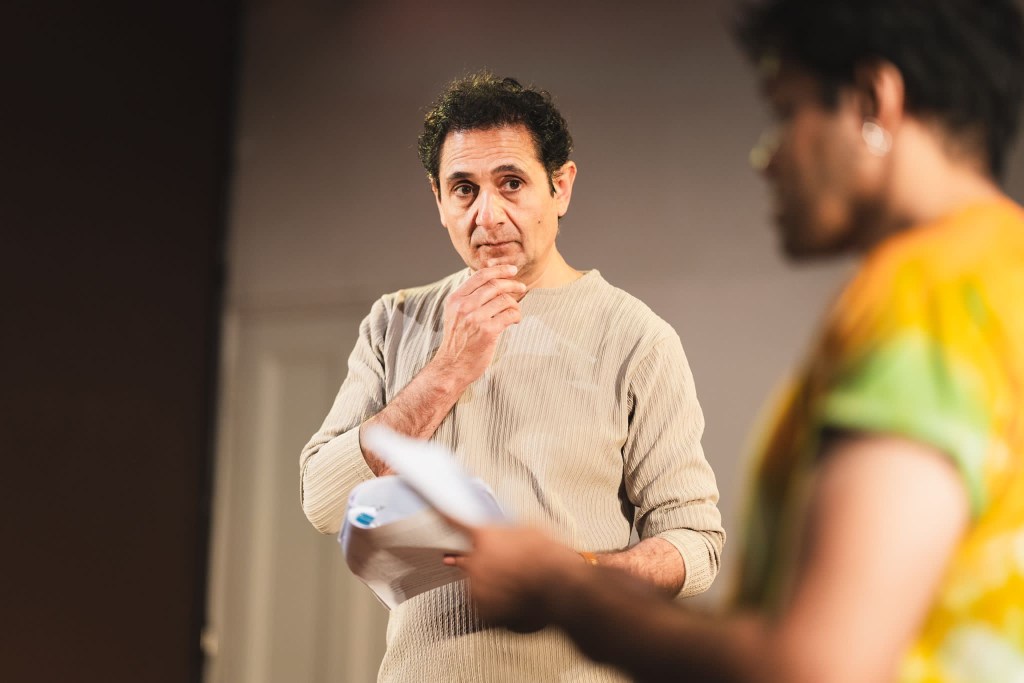
While it appears as the whole family is the centre of the play, I would argue that it was the mother who was the main character of the show. We only know characters, their personalities and past events from the mother’s perspective and comments throughout the play. She is the one controlling the narrative. The grandmother is also an important character, mentioned in most scenes, the kids are missing her, the mother is caring for her (but in a controlling way), the uncle not making time to see or care for her, the father supporting his wife with her mother’s care. So, for me the two most important characters were the mother and the grandmother. Zara (the daughter) seems like a main character as she is loud in all scenes (in a sense of being present and vocal) and it’s mostly her achievements we see. However, I think this part of the story, just like Shiv being off, of her being the sole focus of the parents (came across very realistically). Dilip, the mother’s brother, came across interesting – an evil, uncaring person, who is all about money, while also a caring and intelligent person Zara looks up to. For me, he would be interesting to learn more about, but, as it is the mother’s reflection as well as Zara’s, it is what we can see.
I think the casting was brilliant, the actors portrayed their characters perfectly. And while the actors were amazing, the story stayed the main focus for the whole time and the actors enhanced it by bringing their characters to life (easier to relate, imagine).
I found the play complex, energetic, interesting, and funny, while also dark and real. I could feel the familiarity and observation of a family, a situation (living in India and Britain) and a culture (mixed British and Indian). While I missed some Indian cultural references, I felt a lot of it through my family dynamics, my situation (living in Britain and Hungary) and my mixed culture. The jokes and comments were brilliant – funny and smart. I liked the transitions with the monologues and the jumps. It made me wonder what happens during this time, what is the grandmother like, how are the family’s everyday interactions. I appreciated the mention of mental health issues and addiction and while it was put aside and kept quiet, we got glimpses of it through the brother and his struggles. I was intrigued by the story and would read it as a book. I really hope this play will have an outside life of the Big Share and will be picked up by a larger theatre in London.
A few things to mention that could be worked on to make it even better is mentioning the running time at the details section (to plan with), slowing the beginning down a little bit (it was very fast to start, and I missed quite a few comments) and possibly offer an interval (it was long in one go). But these are really small issues compared to the amazing story and work of all involved in this amazing play.
I had a chat with Aarushi Ganju (Zara) in this play to learn more about her and her career – have a read.
 Hugs and Buttons