“The Migration Museum explores how the movement of people to and from the UK across the ages has made us who we are – as individuals and as nations. The Migration Museum is currently based in Lewisham, south-east London. Please note our new opening times: Thursday–Saturday, 11am–5.30pm. Migration is a pressing contemporary issue and is at the centre of polarised political and online debate. But there’s an underlying story of comings and goings stretching back many centuries. And this story goes to the heart of who we are today. The UK has thousands of museums, but unlike many other countries, from Australia to France, Brazil to the USA, we don’t have a permanent Migration Museum. The time is right for a highly relevant, accessible permanent visitor attraction that shines a light on who we are, where we come from and where we are going. We stage engaging exhibitions and dynamic events, alongside a far-reaching education programme for primary, secondary, university and adult learners. We have a growing digital presence and convene a knowledge-sharing Migration Network of museums and galleries across the UK. Since 2020, the Migration Museum has been based in a venue in the heart of Lewisham Shopping Centre in south London – click here for our latest opening hours and information on how to plan your visit. As a free museum in the middle of a busy shopping centre, we welcome around 70,000 visitors a year from across London and beyond. In 2023/4, we launched a Leeds pop-up museum in Trinity Leeds shopping centre, open until 18 February 2024. The Migration Museum will be based in Lewisham Shopping Centre until at least 2025/26. Longer term, it has received planning permission for a permanent home in the City of London, close to Aldgate and the Tower of London. This will be allied to a network of venues across the UK and a digital storytelling platform. Around 22,000 students from 600 schools, colleges and universities have participated in workshops run by the Migration Museum’s education team since 2013. The Migration Museum’s education team has delivered teacher training to hundreds of new teachers and is engaged in consultation and input into the national curriculum through its partnerships with major examination boards. Featuring all their outputs here: https://www.migrationmuseum.org/outputs/ Heart of Nation – Migration and Making of the NHS – Our national touring exhibition opens in Lewisham on 7 March 2024, shining a light on the stories and experiences of people who have come to Britain to work in the NHS over the past 75 years through photography, film, oral histories and an immersive experience that brings together singing and storytelling.“
I was lucky to have been invited to a site visit to the Migration Museum last week. I have been wanting to go for ages, I have seen and heard so many great things about what the museum does, only that it’s quite far from me. Due to work, I was allowed to go and do a site visit and talk to their team about their projects, exhibition and learning offers
I was surprised at how well the boundaries worked between the shopping centre and the museum. The second you stepped inside their space you felt like you were in a museum (often not the case with a pop-up museum based in a shopping centre). As you went in you were welcomed at the front desk by lovely staff and immediately you noticed the large colourful shop next to them. I absolutely loved the shop – ranging from books, clothes and jewellery to food items all relating to the museum.
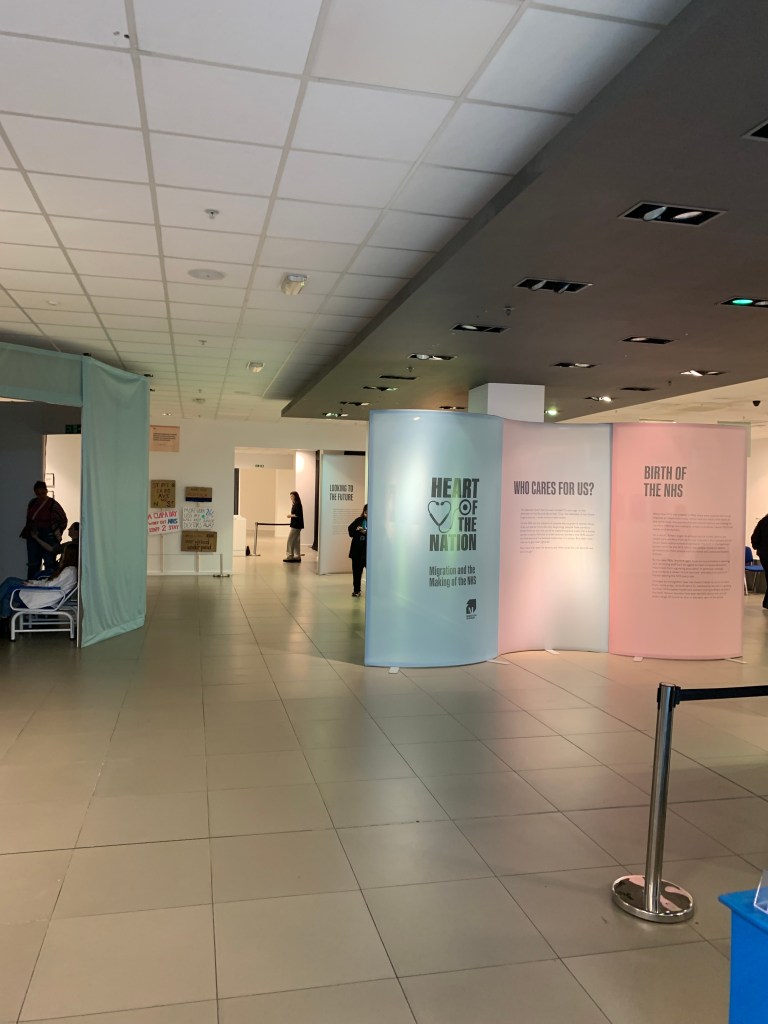
The exhibition at the Migration Museum is a unique one going from digital to physical instead of having the exhibition and adding on digital elements as it normally happens. Due to its digital nature and the Museum’s unique position of having no collection, the exhibition feels different and authentic about people and their stories. What I mean by that is that more and more museums prioritise people and storytelling within their exhibition and programming but it still most often starts with collections and objects. At the Migration Museum, the exhibition was about the NHS and it did give us context of the organisation but argued that it’s made up of people and a lot of them are migrants in Britain with unique stories and backgrounds. You can’t look at the healthcare system and ignore the thousands of people who make up the organisation – this is the clear message of the exhibition. I absolutely loved the design of the exhibition, using chairs, and clipboards, setting up the space to mimic a waiting room and NHS-used tools.
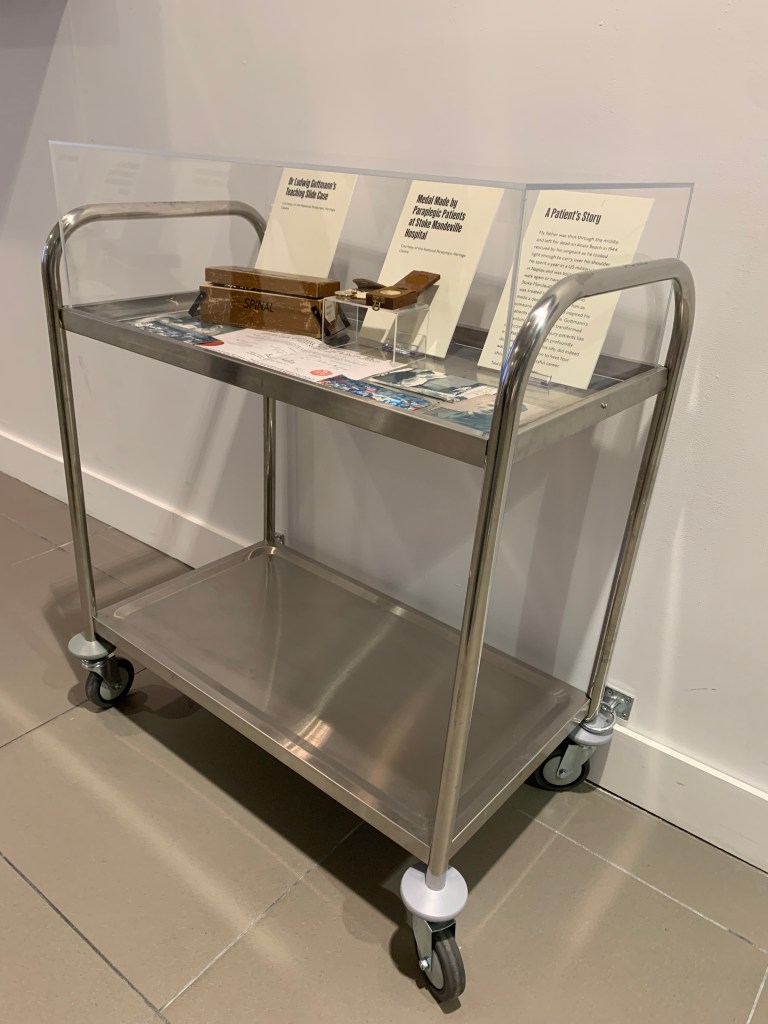
As a serious topic, the exhibition is aimed at adults of all ages and walks of life. It is meant to relate and connect people while talking about a national organisation important to us all. Yes, we all moan about them, but we also were kept safe by them and the organisation as well as the workers are part of our lives.
While it is for adults, the museum offers family-oriented activities like a family trail, toys and children’s stories exhibited along with a playroom at the back that is safe and secluded to offer a space for children to play and families to take a break.
While it is focusing on the NHS and people’s stories across the UK, it has a very strong local focus – creating a connection to the people of Lewisham, where the museum is based. As a migrant myself it feels special to be talking about migration stories and to have a space dedicated to us all. Even with no connection to the NHS, you can see the number (added) of workers coming from your countries and feel proud of the people who do meaningful work.
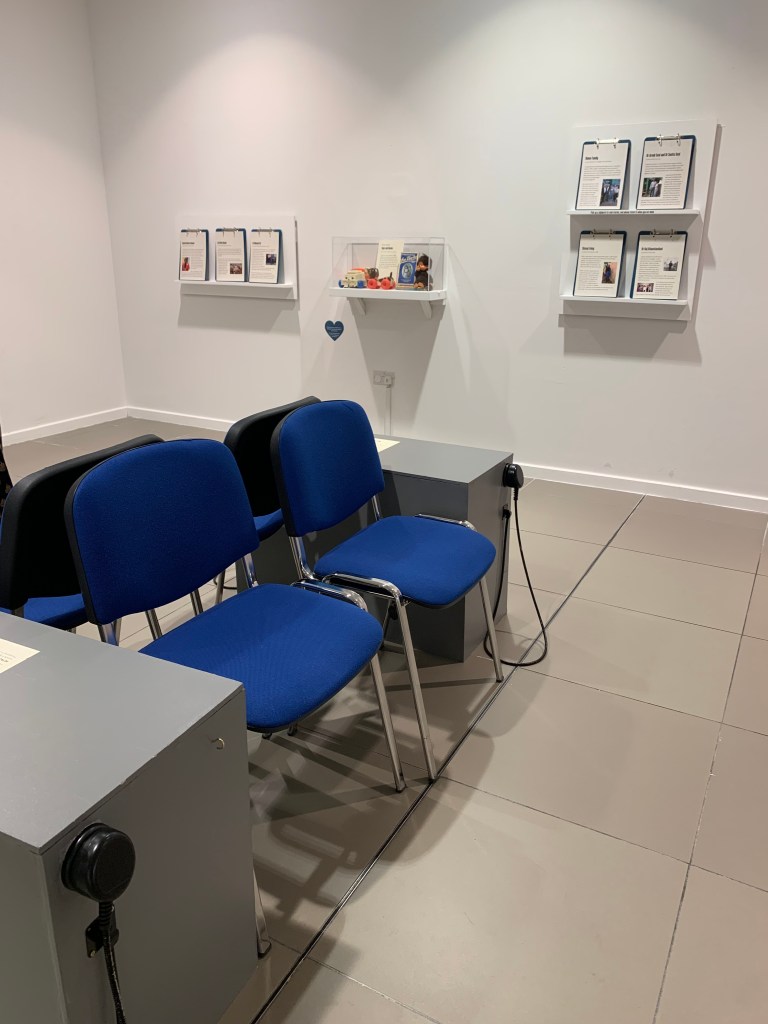
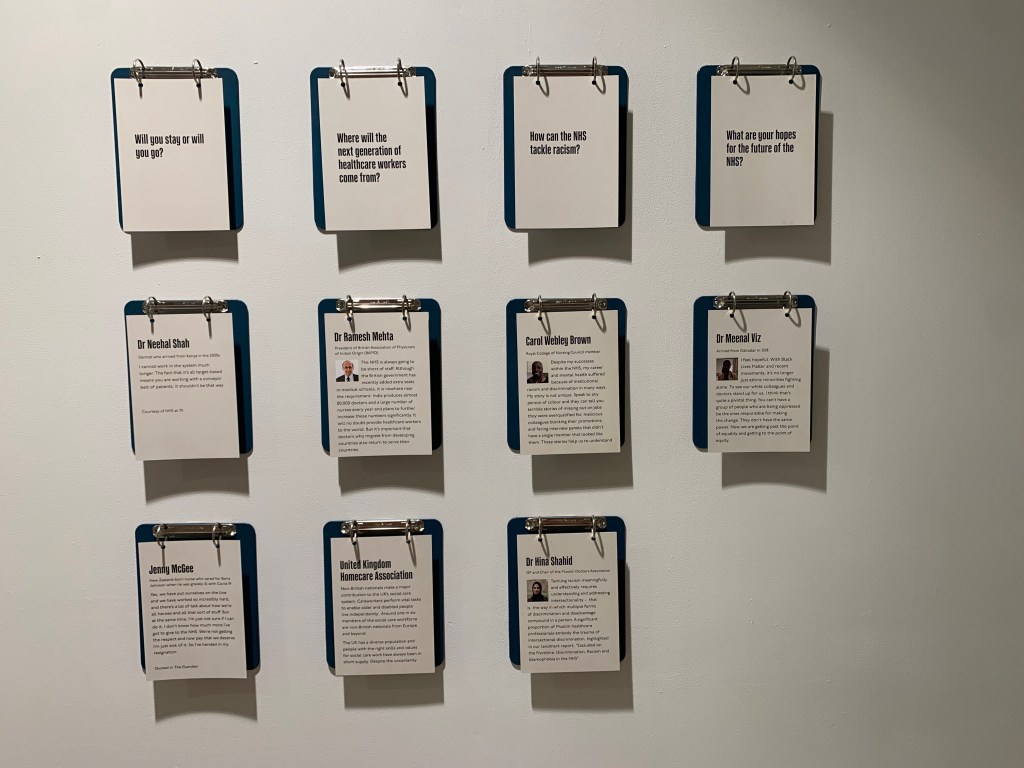
Lewisham Shopping Centre and Migration Museum are free and open to all – it is the very definition of accessible and inclusive as it is placed in a public space. They take the meaning even further as they are located in a shopping centre, therefore accessible for people passing through, living in the area, arriving by public transport etc. There is plenty of space within the museum for people to explore with their own dynamics and learning needs. There are a variety of media ranging from objects to stories written and performed, to clipboards and flags telling us people’s stories along with digital support. I found the space smartly organised – the video area was closed enough that you would not be disturbed by the sound, and specific areas exploring different themes, therefore supporting your journey through the exhibition (which I find important to not be overwhelmed and confused by the mix of themes, amount of labels and objects). There were clear labels with large enough text placed at various heights, space between displays, and it was bright enough without having too much light on. These all make a massive difference for both neurotypical and neurodiverse visitors.
All digital media had closed captions – which is an important access focus for people with different abilities as well as for people whose first language is not English – which is the whole idea of the museum to represent, invite and connect with all people.
The museum has a brilliant gift shop – I would compare it to the V&A’s in quality (if you know, you know!). Brilliant colours and relevant to the museum’s values and mission. Great gift options – as it is based in a shopping centre, it does well in standing unique and different from all the shops around.
There is no coffee shop at the museum (shocking I know – nowadays there are not a lot of museums without one) but being in a shopping centre it is surrounded by coffee shops and food places – taking advantage of its surroundings!
The unique things about the Migration Museum and the NHS exhibition are the origin of the exhibition being digital, placed in public spaces (pop-ups – travelling exhibition) and their connection to so many of us in the UK. We all share experiences (in various ways) of moving away from home and making another country our home. It is so relevant and important to talk about promoting empathy, connection, and compassion as well as creating a modern museum that is interesting and connecting with people through stories instead of just objects behind thick one-sided history telling walls of a museum.
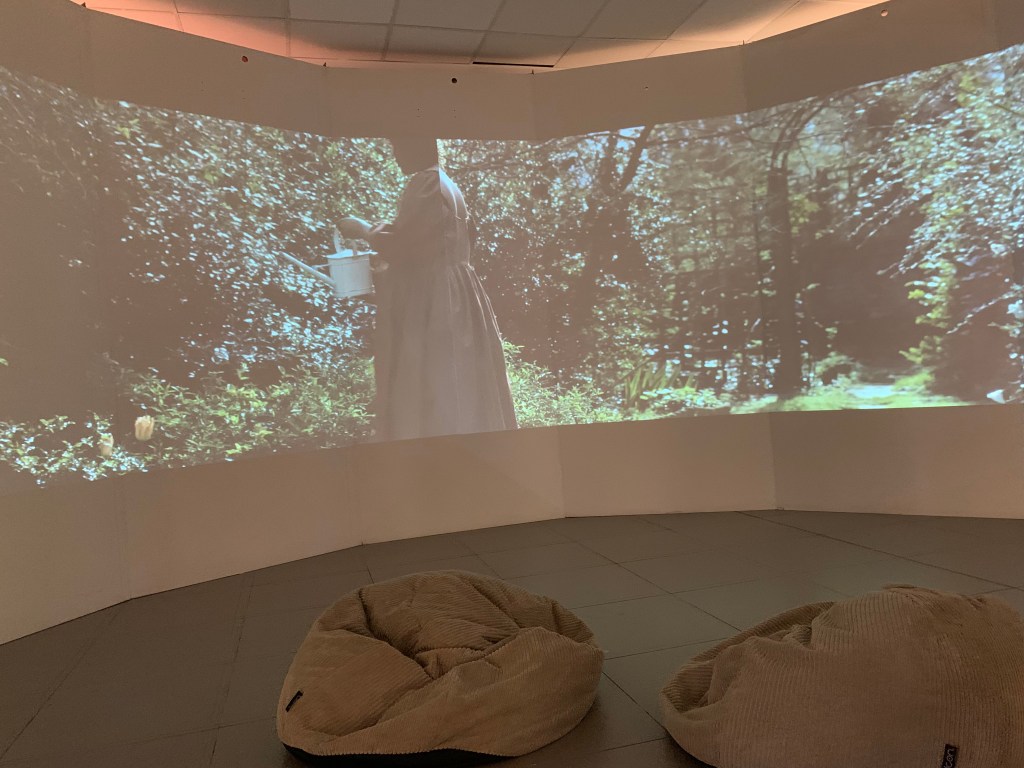
The topic is about something serious and very British, but from the perspective of people and experiences! It is interesting, interactive and immersive. It involves local communities as well as national communities talking about something in common for them all while working together with the museum and artists. It is free and out in a space where people are therefore meeting them where the need is! There is a great balance between micro and macro focus; highlighting Lewisham people, people of London and the UK coming from any and all countries.
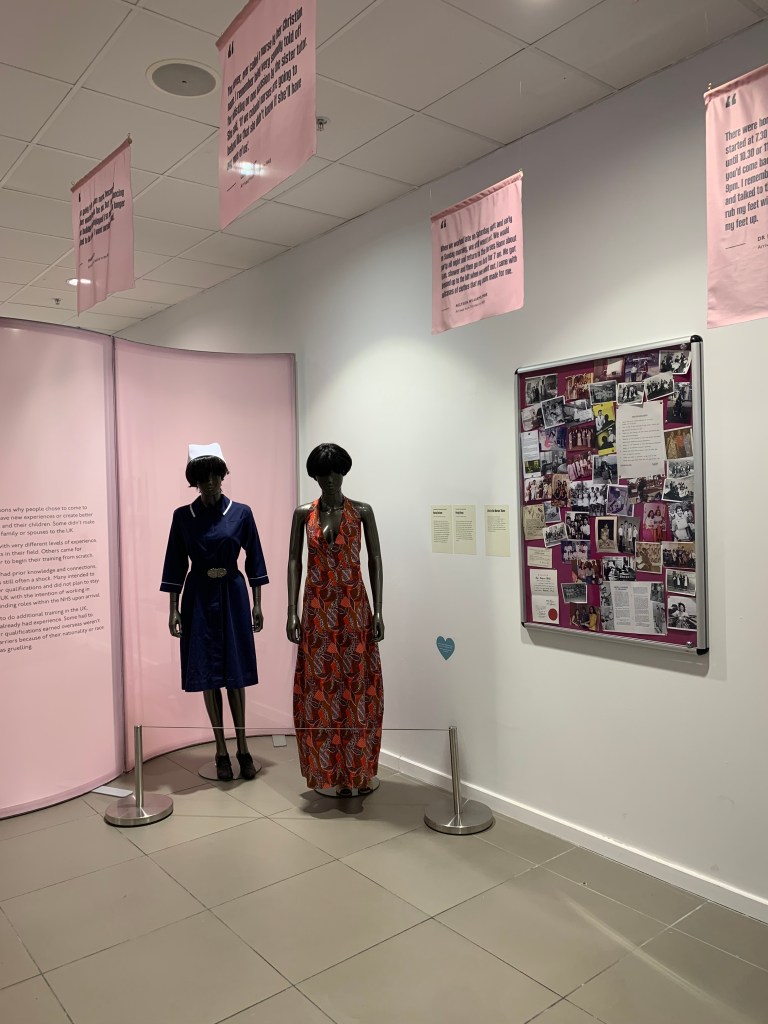
 Hugs and Buttons