Marilyn Scott interview
I spoke to Marilyn Scott – Heritage and arts consultant, former Director of The Lightbox. We talked about her career path, her learning skills that led her to lead a museum, sustainability and her leading skills among other things. It was part of my Museum Association AMA goal to learn more about community engagement, learning in museums and management skills, which we discussed with Marilyn. I hope this converstation will help other emerging museum professionals too.
Find out more about Marilyn, The Lightbox and her consultant role.
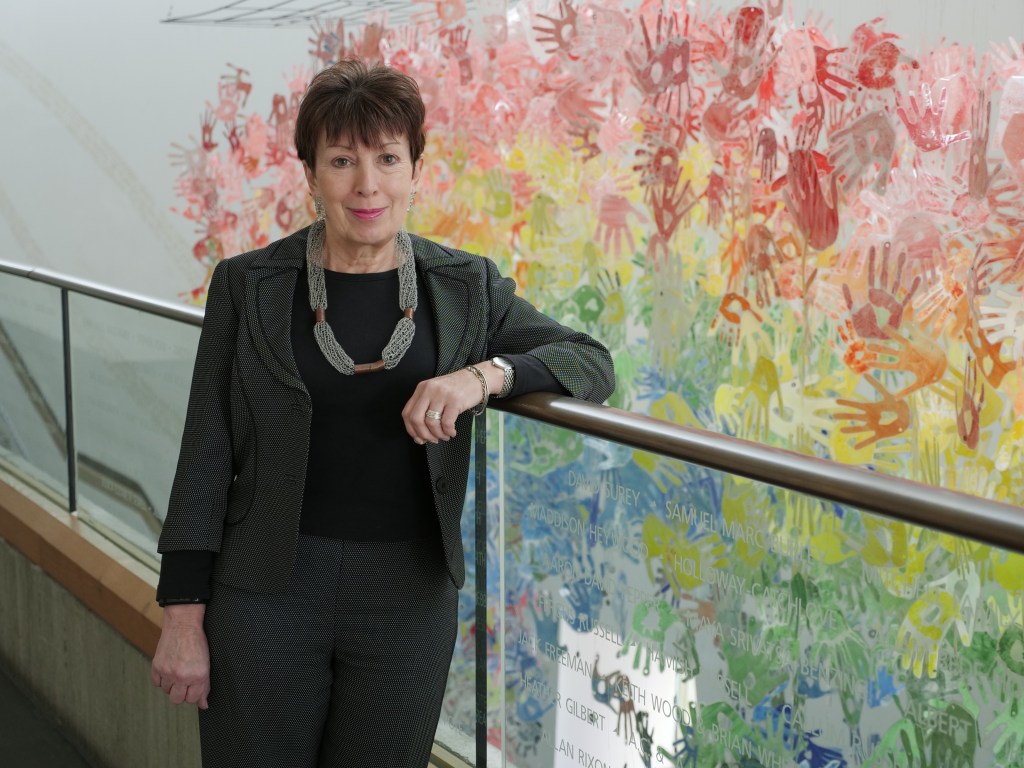
Sara – Could you tell me about your career path? What did you study? How did you get to being a director of The Lightbox and now a freelancer?
Marilyn – I studied History of Art and English at university. I had always been really interested in museums, heritage and history. Originally, I wanted to be a journalist, but while I was at uni, I decided that I really wanted to work in museums and galleries. I was lucky because the History of Art course was quite broad and gave you a chance to go to lots of galleries and experience different kinds of exhibitions. Then I started the inevitable volunteer role because you couldn’t get jobs and it’s really sad it’s still the same as then, nothing has improved at all. You couldn’t get a museum job without experience and couldn’t get experience without a museum job. I volunteered at my local art gallery. I went back to live at home with my parents, volunteered, and applied for loads and loads of jobs. Then fortunately, I was offered a job at the Science Museum in a junior role as a Museum Assistant. I knew nothing about science, but I thought it’s a museum job and I’ll go for it. And while I worked at the science museum I kept applying for jobs at the V&A. I got to know people and kind of worked my way in. I moved over to the V&A and spent 10 years there in all kinds of different roles. I worked in corporate affairs, events, and some curatorial roles as well. I managed to really move around and get lots and lots of different experiences.
What was your favourite from those roles?
I really enjoyed curatorial work. I realised very early on that curatorial work was all about really specialising in a very narrow area and I wanted to do much broader things. I decided that after 10 years that I needed a total change; I wanted to go and work in a really small local museum, where I would get a lot of experience of working with communities. In national museums you don’t get a lot of interaction with visitors and with communities. So, I went to work at the Museum of Richmond, which was a tiny museum with only three members of staff. I took over the learning program working with the community. That was an absolutely fantastic experience, I really enjoyed it. Then I had the opportunity to run one of the very first Museum and Heritage Management Master’s programs in the country at the University of Greenwich. It was a practical postgraduate degree, based in the business school. It was focusing on developing people’s skills right across the board: business planning, finance, marketing, fundraising, really touched on everything. It was a great program. I’ve really enjoyed teaching. Unfortunately, the program folded around 2 years after I left due to the lack of money and students. I had been offered a job at The Lightbox as a director while teaching, and I was keen to go back into museum work because I think after you’ve been teaching for a few years, you begin to wonder whether your practice is still current. You really need to go back into the industry to be really up to date with everything. So, I went to The Lightbox and that was a complete leap of faith. It was originally a six-month contract to do a feasibility study for a new museum and gallery in Woking. I wanted to get back into museums, and I saw this as a really interesting opportunity. I thought it would buy me six months to think and decide what I want to do. I took up the contract and it lead on to a Director role which came to an end in 2021.
Yeah, but you can’t be sure, it could be 6 months, or it could be longer.
Exactly. As it turned out, it was a really good project: the local authority got behind it and we managed to raise money for it. But it was a total lucky break – I saw the ad, they wanted a consultant for six months. I had no idea whether it was ever going to come to anything. It could just have been that six months and then I go off and do something else. It just shows you that you can’t plan and can’t work everything out in life. That was how I got to be director of The Lightbox.
It sounds incredible and I’m really hoping it happens to all of us museum professionals – trying different roles and learning what we want to do. You did a lot of different things, different skills – from working in a big museum, curating, doing corporate and events to moving to a small museum and working in learning. Have you done learning before? Or was it something you learned at that job thrown into it?
Yeah, absolutely. I was really keen to do more community work. When I did my volunteer role that had been quite small, a local museum, so I had seen how local museums can really work with communities. I then went into two major national museums where there wasn’t a great deal of interaction with visitors, and I really wanted to go back to a more involved, community-based role. So, I thought a learning role would very much fit me to do that. It was a great opportunity because I could develop the whole school’s program and the museum’s community engagement. We did hands-on sessions – object handling and loan boxes. It was early days for all those things that now we take for granted. We also did quite a lot of work with older people, going out to retirement groups and care homes. It was everything rolled into one kind of job simply because you were the only learning and outreach person. The other two people were the Director of the museum and the Head of Exhibitions, so there were only three of us. We literally did everything, which is the best way to learn.
Exactly. But did you have enough support? Did you have mentors? How did you develop the program and the outreach yourself?
I suppose I learnt a lot by being in the V&A for a long time. I learned a lot about exhibitions and interpretation. You do get an awareness of what interests people, what exhibitions are successful, what people want to know more about. The V&A did have a really strong learning and schools programme, which I got to know. There were also lots of really good training opportunities, which do come with a bigger museum simply because their budgets are much better. I did the AMA while I was working at the V&A as well as other various training. And I was just lucky that Richmond allowed me to experiment a little bit by doing all kinds of different things. It was quite a new museum, so they wanted to offer new and different things. That’s a really good way to learn.
So how did you go from being a staff member, assistant Junior role to a management or leading level and then going to director? How did you prepare or what skills did you learn at each level that supported you to get further?
The national museums tend to be very hierarchical, so you move up, promoted from one level to the next. I had been promoted quite a number of times. I’d obviously started with very little responsibility and no people management, and then you gradually get a couple of people working for you and then a bigger and bigger team. And so I’d had quite a lot of experience in people management. When I moved to Richmond, I really gave that up because I wanted to move into a different area. And I guess life also comes in, at that time I had a young family, two young children, so I think I was quite content not to have the big job. I appreciated spending some time doing something different and not having leading responsibilities. Then when I went to Greenwich, I had quite a big team under me, so I went back into a staff management role. I also had to manage a big budget and I had never managed a really big budget before. So that was a really steep learning curve but really helpful, as I was getting financial management experience and budget experience. I think it’s key for everybody. At The Lightbox I really tried to give as many staff as possible some budget responsibility, even if just a project budget. That’s a really good experience to manage a budget and learn new skills. I found that really quite scary when I went to the university to work with a large budget. I was lucky at The Lightbox, because when I went there, I just went there as a consultant looking at the possibility of a museum being established. Then we went through all the different phases, we had to raise the money, after which there was a two-year construction period. After I had been there, effectively six years, the museum opened in 2007. So, I had six years of learning a lot about different things before I had to actually open and run the museum. I’d had quite a gentle way to learn. It didn’t feel gentle at the time, but I had quite a long period to actually grow into being the chief executive.
You said it was helpful to have had six years of easing in and I can see that you learned quite a bit in different areas of how to do it. But six years is a long time to wait and be patient. I’m wondering if you felt it as a learning experience or were you impatient to get the actual museum up and running? If so, how did you manage that?
It was so full on, the busiest period of my whole life. We had to raise 7.2 million pounds, that was a major Lottery application. Then it was lots and lots of fundraising with grant applications that took up probably three of the six years. And then the whole construction phase. Anybody who’s been involved in the construction of a new building, that is just so full on. During those years there were a lot of different experiences, and it felt like a lot of different jobs. It was a fantastic experience, and anybody will tell you who has been through that kind of building a new museum and then going on to run it – It’s such a privilege. It’s an experience you’ll never repeat in your lifetime.
So, because you started this museum you could put in place the values you wanted to have in the organisation, you could set up the whole program and the working environment. And you worked at other museums where there were already set institution values and mentality. I’m wondering what you did differently that you didn’t like in the big ones or the already set up ones and what inspired you from previous museums to include in the Lightbox?
Yeah, I think the heart of our vision and the lightbulb moment was that this is a museum and gallery which will only work if it’s supported and wanted by the community. If the community doesn’t want to, or they reject us, then we’ve wasted our time. Woking is not the obvious place for a contemporary art gallery and a museum. We’re establishing it because we believe there’s a real need, but that need has to come from the community. At the heart of it was always that we will be what the community wants us to be. Not what I want, not what the Chief Exec of the council wants, not what our Board of Trustees want. It’s what the community really needs and wants. And that had to stay at the forefront of our minds the whole time. And that’s hard work because in order to understand what the community wants; you have to talk to them and have a constant dialogue with people. It is quite hard work, but it’s also incredibly rewarding. The day The Lightbox opened there were people queuing all the way into town to come in because they felt an ownership of the building as they’ve been involved for so many years. They felt it belonged to them and that was just fantastic. Achieved exactly what we wanted.
And you kept that mentality going while you were running it?
Just kept it going, always had in mind that without visitors and people’s buy-in we are nothing. It’s not enough for us to think we’re a good thing everybody else has to as well.
I saw that you were winning some awards for the museum. Can I ask what you were winning on?
Yeah, we won museum of the year in 2008. And we had only been open for six months when we won the award. Museum of the Year is for new museums, but we had been open a really short time when we won the award. It was amazing, because suddenly we had a national profile, which we wouldn’t have had otherwise. It made a huge difference.
You had some kind of a family or kids-oriented award or special mention as well?
Yes, Family Friendly Museum of the Year, we were shortlisted for that. The Museum was also recently shortlisted for Best Age-Friendly Welcome and for Access and Inclusivity. We also won quite a few architectural awards as well because it’s a very green and sustainable building.
Can I ask about your family program? What did you do for kids, families, informal, inclusive kinds of programmes?
The philosophy has always been that we will try and cater for a range of audiences. So, there will always be the inclusivity of free events, free drop-in workshops where families can come for as long or short of a time they want, and everything would be free. We know that a large percentage of people who came to those workshops were first time museum goers and were from the lower quartiles of the economic profile and also very diverse in terms of ethnicity. So that really drove a very equal and inclusive kind of program. On the other hand, there are commercial realities about running an independent museum, which means you have to earn money. We were aware that there were people who were very interested in a whole range of things like drawing classes, painting classes, art history talks, and they were prepared to pay for a good quality program. We always tried to strike the balance of free programs, free family activities, but also some really high quality, mainly adult workshops, talks, etc. We also had a lot of targeted programs, which again, were free or very low costs, mainly paid for by grant applications. That was for early-stage dementia, mental health, young carers, people with alcohol and drug dependency; we had a lot of different strands of work. Quite often we would work with partner organisations. For example, with our mental health program, we’ve worked with Mind. We would work with experts who know exactly how to run those programs, how to reach those people. You can’t expect three learning staff to have the skills and ability to work with that really wide range of people. So, the way to do that effectively, is to work in partnership with those organisations who have that expertise. It has always worked really, really well. It also helped to build the skills of our team. When you’re working alongside an organisation like Mind, you learn a massive amount so from that partnership our team was able to grow in their own confidence in working with people with very specific needs.
I know the building is all green and sustainable, but as a practice and as a museum professional, how did you incorporate that into your museum itself? What advice can you give us young and emerging professionals to take that forward?
I think sustainability for me means a number of different things. There is the obvious kind of environmental sustainability, and I think what we were able to do because we were building a new building, was to make sure that we took advantage of as much up to date technology as we could in terms of building materials, the way we ventilate the building (natural ventilation), the lowest use of power possible, collecting rainwater. These were all incorporated into the building. Then it’s being very aware of your own practices. Limiting photocopy machines and putting it at walking distance to all people so they would think before using it. Sourcing local suppliers wherever we could. Looking at the café – how they package and display things. And really trying to get everybody to think about their own behaviours, encouraging everyone to take personal responsibility. We made sure that we had cycle racks, we had a shower so people could shower if they cycled in and if people were walking in making sure that they had somebody to walk with. We were trying to make sustainable behaviours easy. So, I think trying to change those behaviours and making people aware was really important.
The other meaning of sustainability for me is also organisational sustainability. By that I mean making sure you’ve got a really robust business plan, where you have really good income streams and you’ve got that really nice balance between social responsibility and commercial reality and you feel comfortable with where you’re sitting on that line between totally charitable and totally commercial. We need to be somewhere on that line because that gives you true sustainability.
Also thinking about your staff and caring for people or being aware of your staff’s well-being. I found that really acute because we were caring for so many other people, so many groups who had real needs in the community. And it’s very easy to think about all those people and miss the people who are doing that delivery. So, making sure that your team is happy, that they have time to socialise together, that there is time to always appreciate them and tell them how good they are, to give them space to have their own anxieties, to share concerns. So, we paid for a counselling service where staff could talk to someone about any problem, be that financial, relationship or work. Through COVID that was amazingly needed. We set it up before COVID, but it helped so much. I think that is trying to make your own organisation as sustainable as possible. Because if you get a lot of people leaving you have a really high turnover of staff that makes the organisation really unstable. And so, making it easy for people to stay there and be happy, I think, was really important.
I love that. And I keep thinking about our situation now – I’m trying to figure out something as well for our wellbeing team doing all this dementia work, which is lovely, rewarding, but at the same time, so hard sometimes. We have these incredible volunteers and I’m trying to check in with them and tell them to not take things personally during a session, but even I feel it when I lead a session. And they’re doing it in their free time. So, it sounds really good. I need to think more and come up with something, because it’s not easy to care for other people and of course that’s our focus but we are people too.
We had a situation where, in the space of three weeks, we lost two of our regular dementia participants and they had been with us for four or five years. The learning team were just devastated because you know, they came to really love those people. They have had difficulty watching their condition decline. Because clearly you don’t get better from dementia, you only get worse. And so, inevitably, you know, they knew that these people were not going to be around for much longer, but when it happens, it’s really hard.
Yeah, I don’t even want to think about that. We’re not quite there yet. But it could happen, and we do need support for all of us. That sounds really, really good. And it kind of comes to your leading style as a director and I really like what you were saying, what you prioritise for sustainability, not just environment and business but people.
I was wondering if you could tell me the top five skills or leading styles you had. I don’t know if that’s something explainable or if it’s your personality, your values, personal professional.
I think there are skills for leading people. I think you have to be empathetic. You have to think about people’s own lives. We all come into work and try to be bright and breezy, but we’re all leaving behind us often quite difficult situations. So being empathetic, being open, helping people to kind of trust you, so they feel if they’ve got difficulties or there are things they need to talk about that they can trust you. It means you can’t kind of be too distant. I know when you’re a director, when you’re CEO, people are quite afraid of you, quite unnecessarily, of course. It’s important to try to get across that you are human yourself and you do understand difficulties and you are not going to think any less of someone because they display weakness. So, empathy, really important. Being open, I think encourages people to talk to you and give their opinions, to give people the feeling that their opinions are valued and if you can’t act on their opinions, explaining why. So, you’re not just dismissing the idea, and someone goes away and thinks, oh my god, that must have been a really bad idea. They go away and they understand. So being really open to discussion. I think collaborative, really encouraging everyone not to sit in a little silo and think, Okay, I’m in the learning team, so I can’t talk to the exhibition team. Trying to bring everyone together in a really collaborative atmosphere. I used to set up project teams. If we got funding for a project, I would put someone from every department into the project team because they all came at it from a different perspective. And that was really helpful that you would have people coming in with a different view. Collaboration is really important. You’ve got to be inspiring. Even if you’re quite a shy person, which actually I am, you have to overcome that. You’ve got to inspire people. It’s hard to achieve a goal to try and be really inspiring, even on the day when you may feel rubbish, or frustrated. You’ve got to overcome that and just go in and be inspiring. And I think also, you’ve got to be able to advocate for your organisation outside. I think a lot of what I’ve been talking about is all internal about the way you work with teams and what you do for teams. But you also need to go out into the big world and say that ‘We are fantastic’. ‘These are all the things we’re doing, we’re an amazing organisation’. You have to have that confidence to go out and talk to people externally.
These skills are really good to lead, I agree. I recently read a book called Museum as agents of change and this is pretty much what the main theme was. It’s lovely to hear an actual person doing it and talking about it, not just reading about it.
You’re freelancing now, right? Are you still involved with The Lightbox?
No, I’m not involved with The Lightbox anymore. I made a very conscious decision when I decided to step down, that it would be a clean break; I think it’s hard enough for someone to follow someone who’s been 20 years in an organisation and it’s even harder if that person’s still hanging around. It will always be part of my life. I’m really doing what I had started to do over the last five years, and that is to pass on a lot of things I’d learned. When I look back, I’ve learned an amazing amount and it would be a real shame not to be able to use that and pass it on. I work on all kinds of different projects. I help a lot with governance and structure for organisations to make sure they are working in the most efficient way possible. I also work very practically on new museum projects, lottery funded projects where I can really use my experience with The Lightbox. It’s great because I can do a project with very nice people and then I can walk away. Which is quite nice to be able to say, ‘Okay, I’ve given you the tools to do it and now I’m going to leave you to get on with it’.
Are you working on more shorter-term projects?
Yeah. They tend to be 6–9-month projects. Some are longer if they’re a long construction project that might be longer. It’s a nice and huge variety. You can work with all different kinds of organisations, different kinds of connections.
Do you find these projects, or do they find you or both?
Luckily, so far, they have been finding me. When I started, I thought I was going to have to get my marketing hat on and be really active in promoting myself. But actually, I haven’t needed to do that so far.
I guess your work did that for you.
Yeah, people knew I was leaving The Lightbox, so I got lots and lots of people asking me to help with different projects, which is lovely.
Yeah, that sounds great. Do you do some from home and some from actual places you work with?
It’s been really nice post COVID to get back to actually going to places. I did have interesting situations where I was trying to help people with projects, and I’ve never even been on site. So, it’s lovely to actually get back to go into places again.
Thank you very much for our talk. I learned so much and I’m going to share this with others, hopefully people will read it and will learn from it. It was lovely to meet you. It was lovely to hear somebody on that side of the museum career. I’m actually excited for my career now, to see where I go.
A big lesson, which I always say to younger people, is to just take every opportunity, don’t over think. If it’s something that you think will be interesting, then do it!
It does sound good, definitely. Thank you.
Lovely to meet you, too.
 Hugs and Buttons