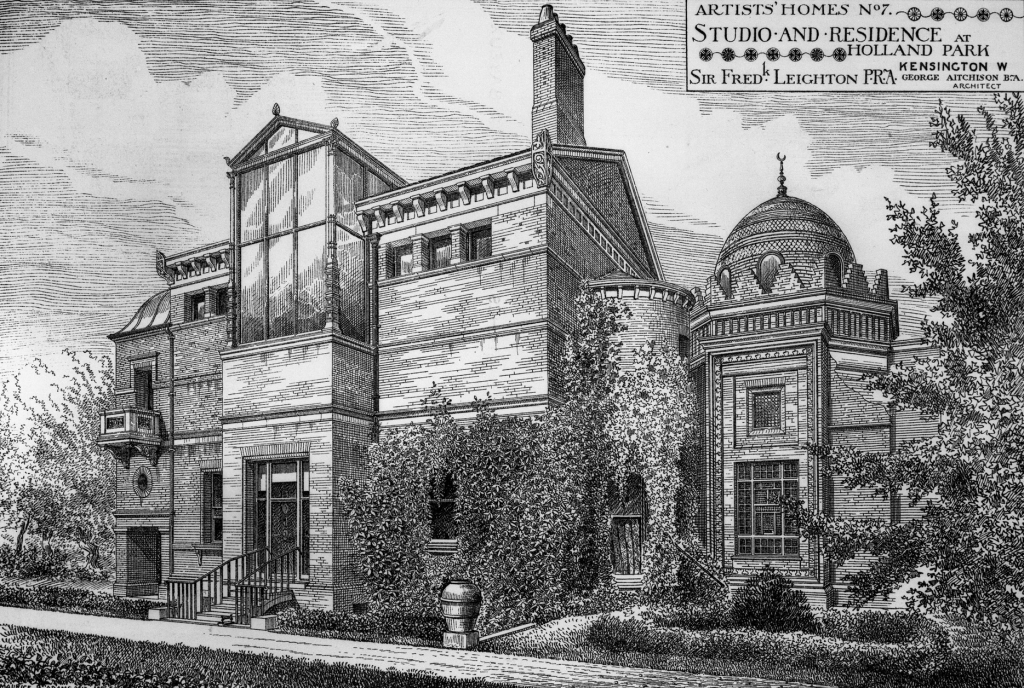
The former home and studio of the leading Victorian artist Frederic, Lord Leighton (1830-1896), from its first construction in the 1860s up until shortly before Leighton’s death, his studio house on the edge of Holland Park was a constant preoccupation. Absorbing large amounts of his time, money and effort, the house combined spaces for living, working and entertaining and the display of Leighton’s collections. Regularly featured in the press, his home came to embody the idea of how a great artist should live.
When Leighton died in 1896 his collection was sold off at Christie’s and dispersed. The house however was retained and in 1900 it was opened as a museum and run by a committee led by Leighton’s neighbour and biographer Emilie Barrington. Initially, the focus of the displays was works by Leighton, in particular a collection of around 700 sheets of his drawings, which Leighton’s sisters helped the museum acquire. Barrington also donated a number of works to the museum including landscape sketches and the painting of a Venetian Doge by the studio of Domenico Tintoretto which now hangs in the Entrance Hall. In November 2019, Leighton House began a major project to refurbish the twentieth-century additions to the museum. In the Hidden Gem to National Treasure project these spaces were redeveloped and opened up to the public, creating new visitor facilities including, a new ticket office/shop, café, additional display space, step-free access to all floors of the building, a purpose-built collections store and a dedicated drawings gallery and learning centre.
Out Shopping: The Dresses of Marion and Maud Sambourne (1880-1910) unveils the Sambourne House collection of dresses belonging to Marion and Maud Sambourne, showcasing hardly seen, rare surviving examples by leading dressmakers of the era. For the first time in the history of the museums, the exhibition spans across both Leighton House and Sambourne House, inviting visitors to embark on an immersive journey.
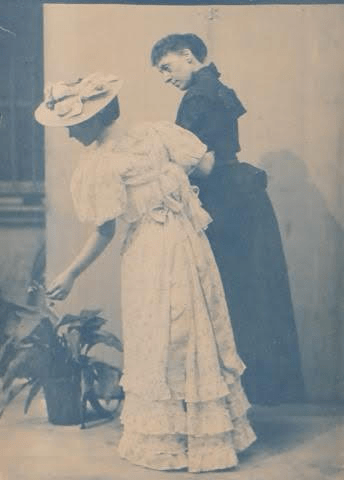
Meet Marion and Maud
Marion Sambourne was the wife of Victorian illustrator Linley Sambourne. Their daughter, Maud, shared an artistic flair which she abandoned in pursuit of a prosperous marriage with Leonard Messel. This major exhibition features a selection of dresses they wore for special moments and social occasions, many of them of national significance as rare surviving examples by leading designers of the era – often female.
I have been seeing posters about Out Shopping and have been planning a trip to Leighton House for weeks now. I have not been before and this was the perfect opportunity to see the house and see another gorgeous fashion exhibition (this year is all about fashion exhibitions for me). I took a day off from work and planned it as a museum day – Leighton House and Kensington Palace – as they were close walking distance from each other, the weather was perfect for a walk and both had interesting new (not so new) exhibitions on.
I arrived at Leighton House and was welcomed by the front-of-house staff. Due to my Museum Association membership, I was lucky and could get in for free. Leighton House starts with a small but beautiful gift shop, a small display and information boards about Leighton and his work and contemporaries. There is also a small but bright and spacious café on the right full of gorgeous looking cakes, sandwiches and coffee.
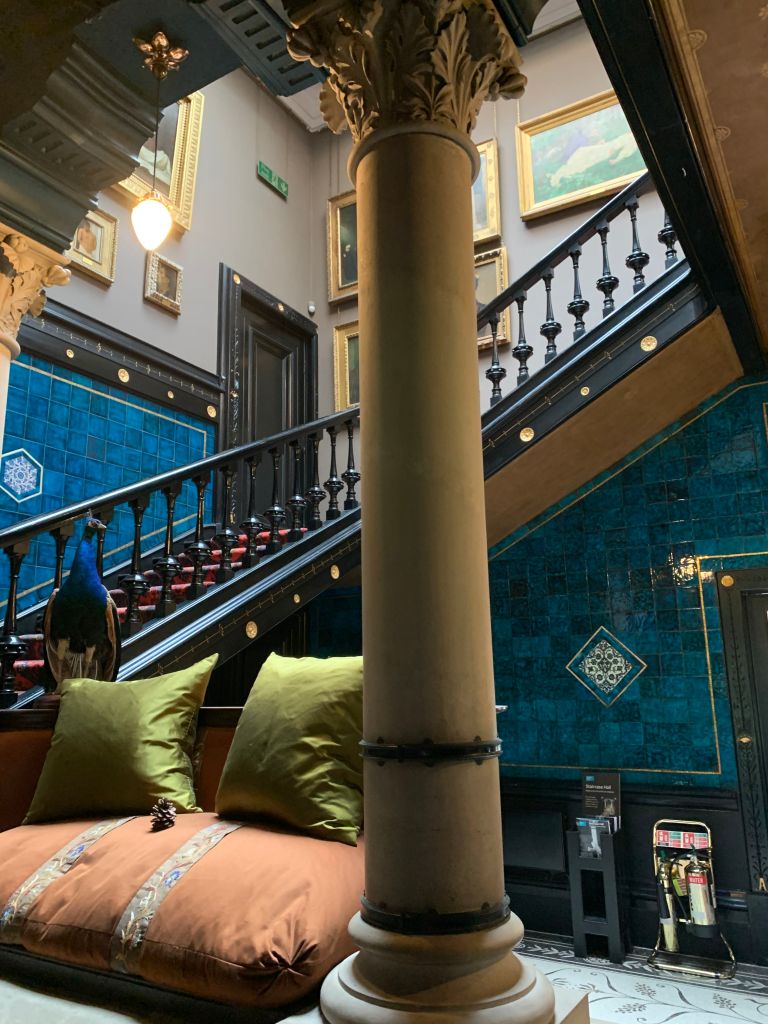
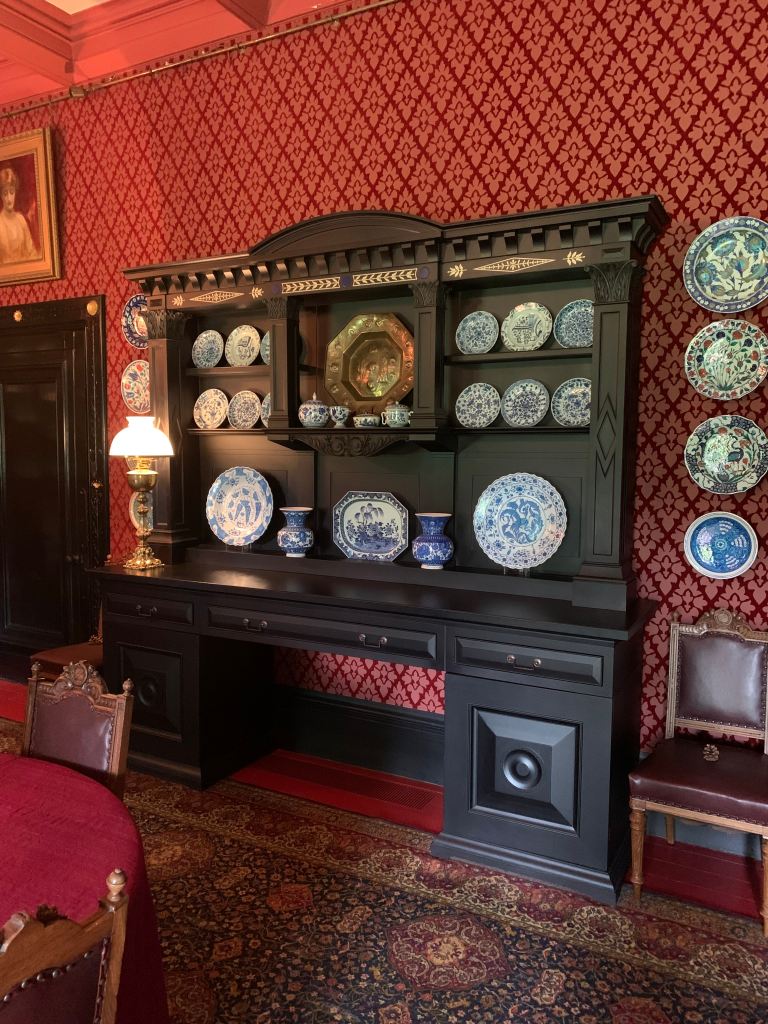
What a beautiful house it is! It was a surprise to me compared to other historical houses. I didn’t know much about Frederic Leighton before my visit and I couldn’t believe the home he created for himself, filling it with brilliant colours and art. It was funky, colourful and spectacular while also felt like a home where someone lived and created art. I loved the different styles of each room while keeping them all airy, spacious and full of colours. I’m pleased for all the hard work that has gone into conserving this house!
It also had a beautiful big garden at the back that offered a moment of tranquillity from busy London. There were chairs and benches around inviting people to spend time in the garden. There was also an outdoor area for the café. I took some time reading there while others were having a catch-up or a break from the visit.
I had a great time exploring the house and then the temporary exhibition surrounded by people but not interfering with my me-time. It is a place designed for adults – perfect for locals (from the borough, Londoners and people from around the country) as well as for tourists. I saw quite a few friend groups exploring the house and there were various languages spoken. There were people of all ages around, many young adults along with older people. I could not see a lot of family and children-focused activities around the house but I could imagine them coming and having an experience of how an artist lived and worked in the past. When I talked to the people at the front desk, they mentioned schools coming for self-guided visits and public tours available for visitors.
I loved the organisation of the space – access to the shop, café and the front display and information panels for free, which then offers an experience even if you are not wanting to go into the house. You can see people come to meet up at the café (felt very friendly and buzzing without being too loud) as a local choice for a catch-up.
Leighton House is doing great with their accessibility offer. They offer free public tours led by volunteers three days a week (with admission tickets), free entry to the garden, café and shop as well as free or discounted entry for various concessions. They offer a pay-what-you-want day once a month as well to support low-income visitors. It is easy to get to the house, only 5-10 minutes from surrounding stations and bus stops. Around the house there are great resources supporting physical access needs: lift, all floors even, foldable chairs around the house, accessible and inclusive toilets, large prints and interpretations available in each room along with magnifying glasses and subtitles for all visual contents. You can find the floor map on the website as well as printed ones in the booklets that are supporting your visit. There is also sensory access information on the website offering quieter times for the visit.
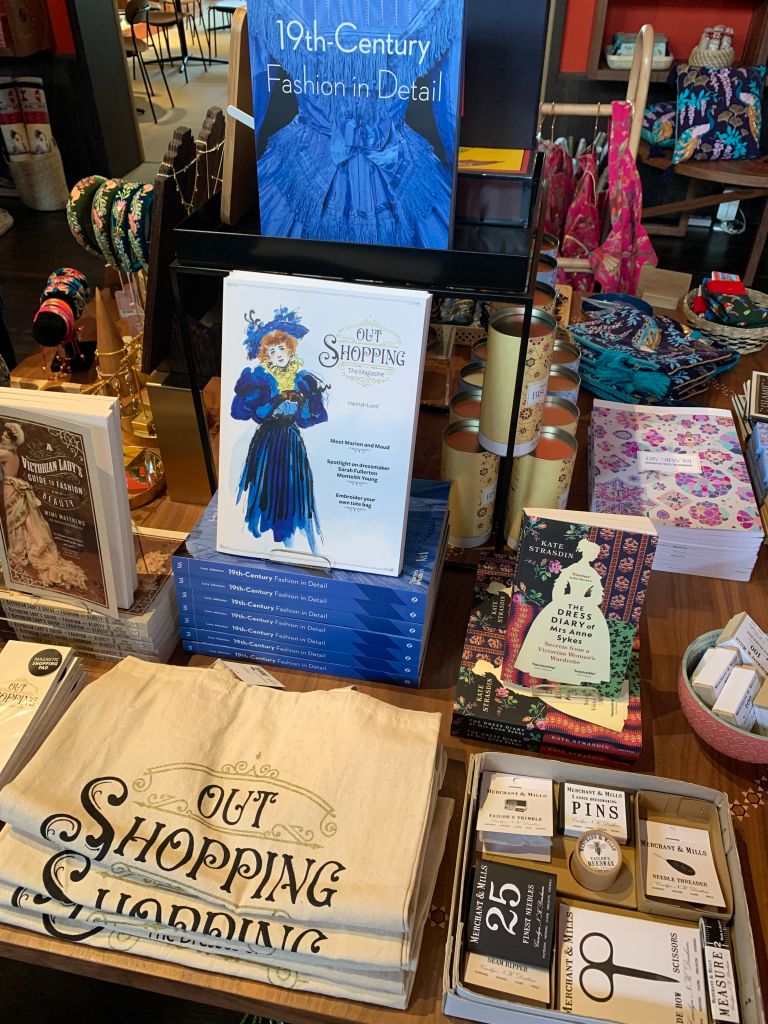
The shop was a nice mix of books, prints, postcards and relevant knick-knacks to the exhibition. Small but beautiful and affordable. Great for gift ideas – will definitely be returning for gift shopping.
The Out Shopping exhibition was done really well. It was relatively on the small side but it gave us so much. I didn’t know anything about Marion or Maud or their fashion styles but I was amazed by their wardrobe as well as their personalities. The exhibition included panels of context (of society, and of Marion and Maud, personal stories and diary/letter entries), letters and diary entries with sketches which gave us a peak into a relationship, a family as well as into society, dresses and fashion history too. The mixture of a bigger focus on society, and the happenings of the family supported by their voices through letters and diaries was what made the exhibition so special.
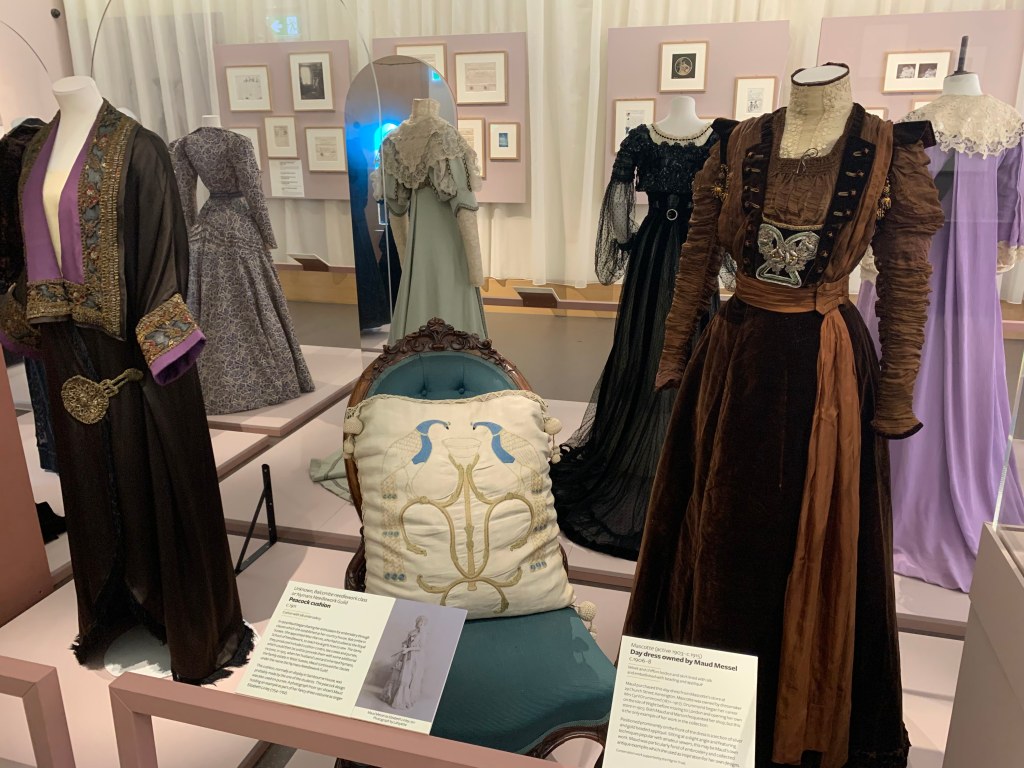
I loved the exhibition design – the placement of dresses, dividers offering background and clear boundaries between themes. The walls were set up like windows with transparent long curtains around, which for me felt peaceful and home-like. It was subtle but supported the dresses and the middle area greatly.

Marion was great at sketching and I loved her style. She is light and funny in her letters to her mum. Most letters include sketches of happenings she would mention in her letters or (my favourite part) sketches of dresses and outfits. You can feel the love and the closeness between the mother and daughter.
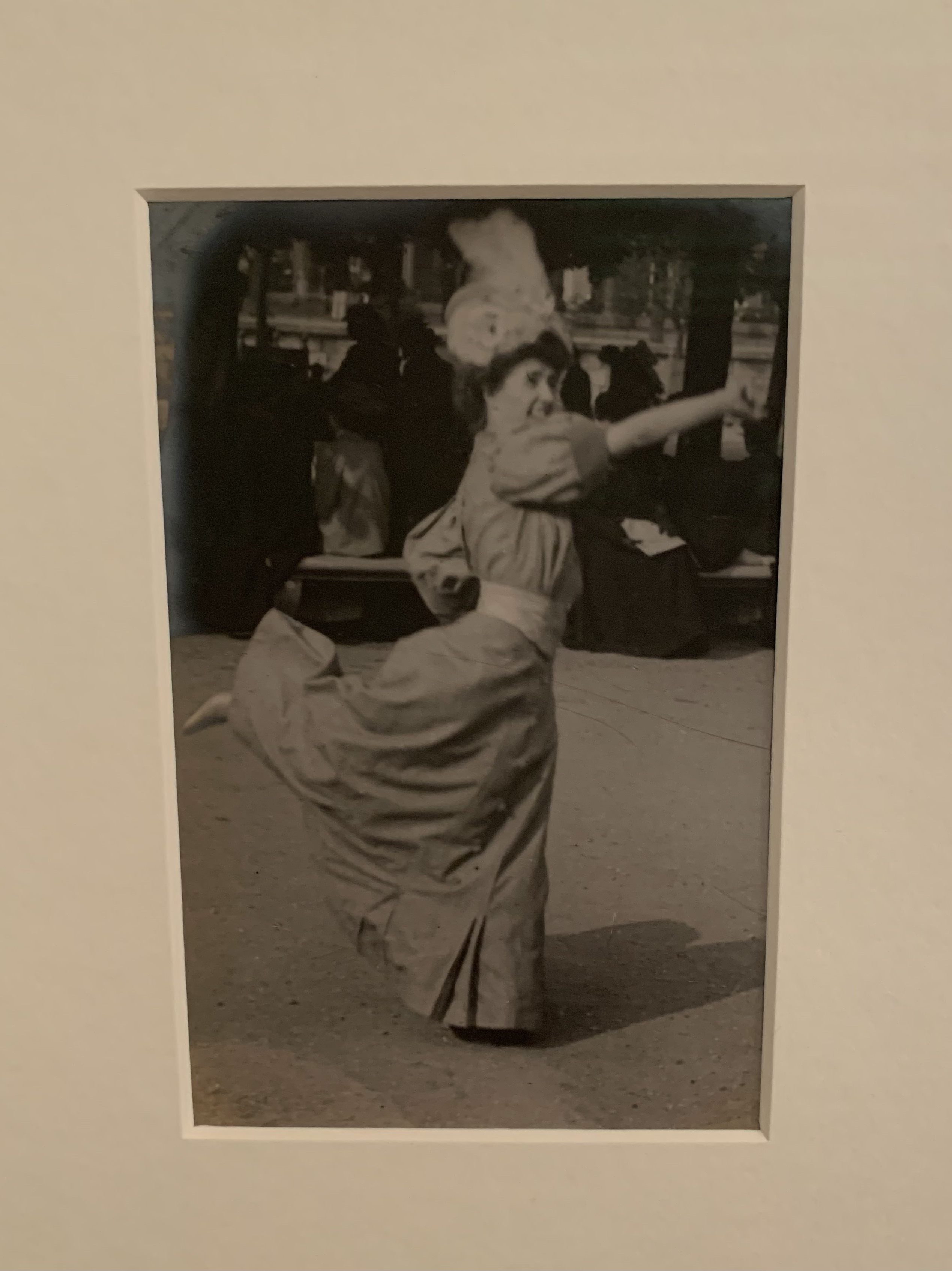
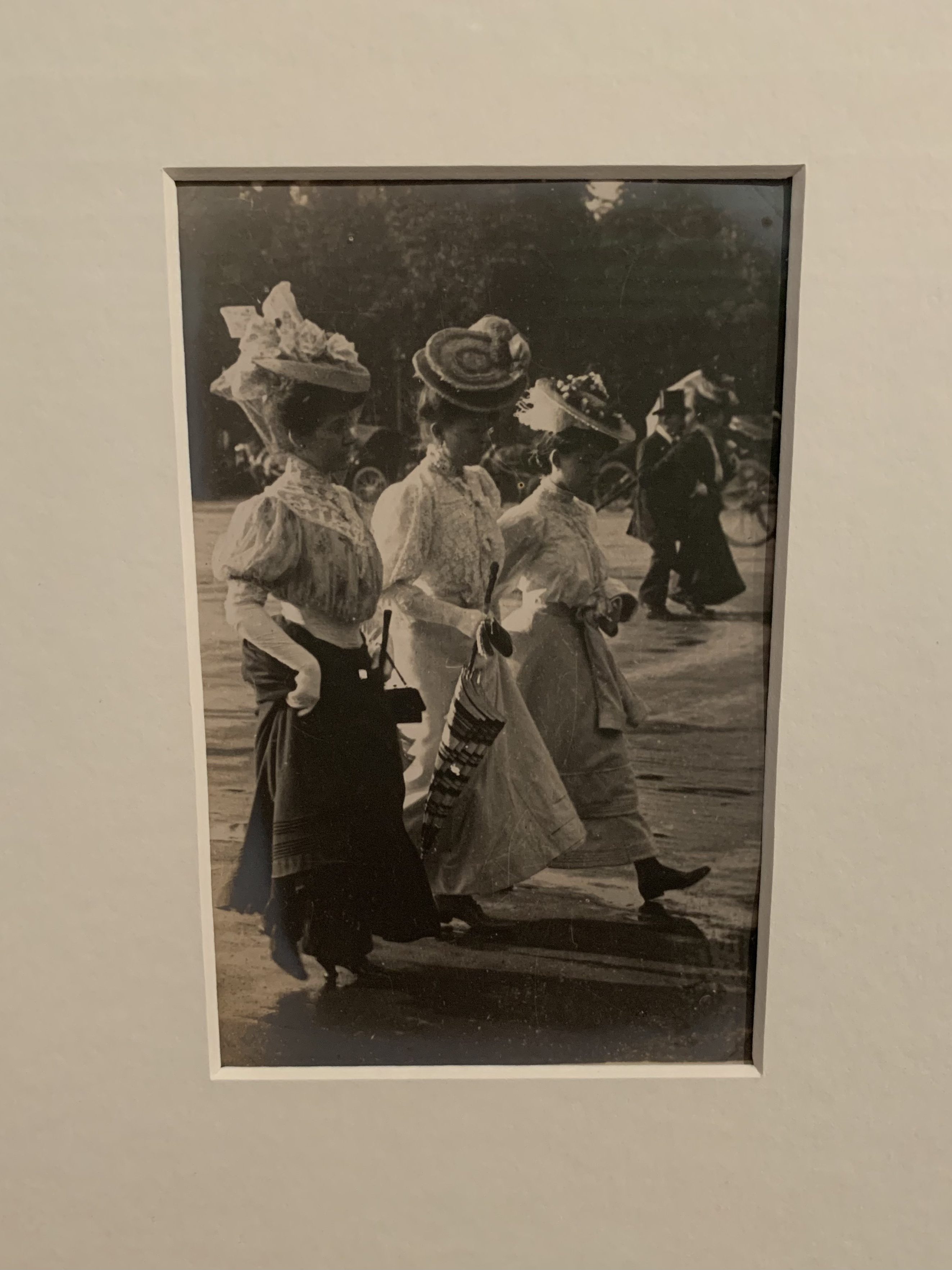
The exhibition ended downstairs with a selection of street photography by Linley Sambourne (Marion’s husband) taken during a weekend out in Paris in 1906. It is capturing cute moments and fashion in the fashion city.
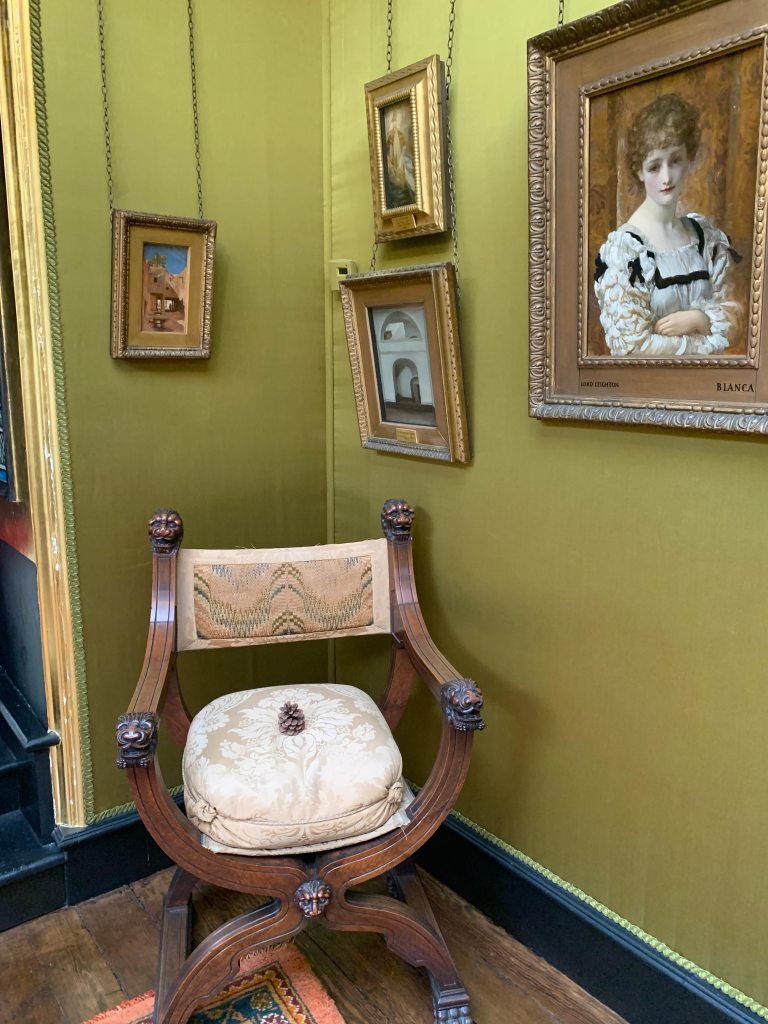
Leighton House has a beautiful colourful and bohemian interior design, a spacious garden, a lack of crowds and relaxing atmosphere (could have been my timing – midday on a weekday) and a high-quality fashion exhibition! Loved the storytelling element throughout the house as well as the ‘experience it’ feels to the house. A personal favourite of mine was the pine cones on chairs to discourage people from sitting down on historical objects (usually would have a do not sit sign), but they referenced (at least for me) the Sound of Music pine cone on chair scene and I loved it!
 Hugs and Buttons