“Adventures, journeys and revolutions. Be transported through the thought-provoking world of interactive writing. How has technology transformed how we tell stories? Jump into brave new digital worlds with some of the best examples of experimental narratives: escape from zombies, travel with Phileas Fogg, hear about life-changing events from the people who lived them and discover poetry written using the weather. Calling all techies, writers, gamers and lovers of tales, it’s time to discover the boundary-defying nature of digital storytelling.”
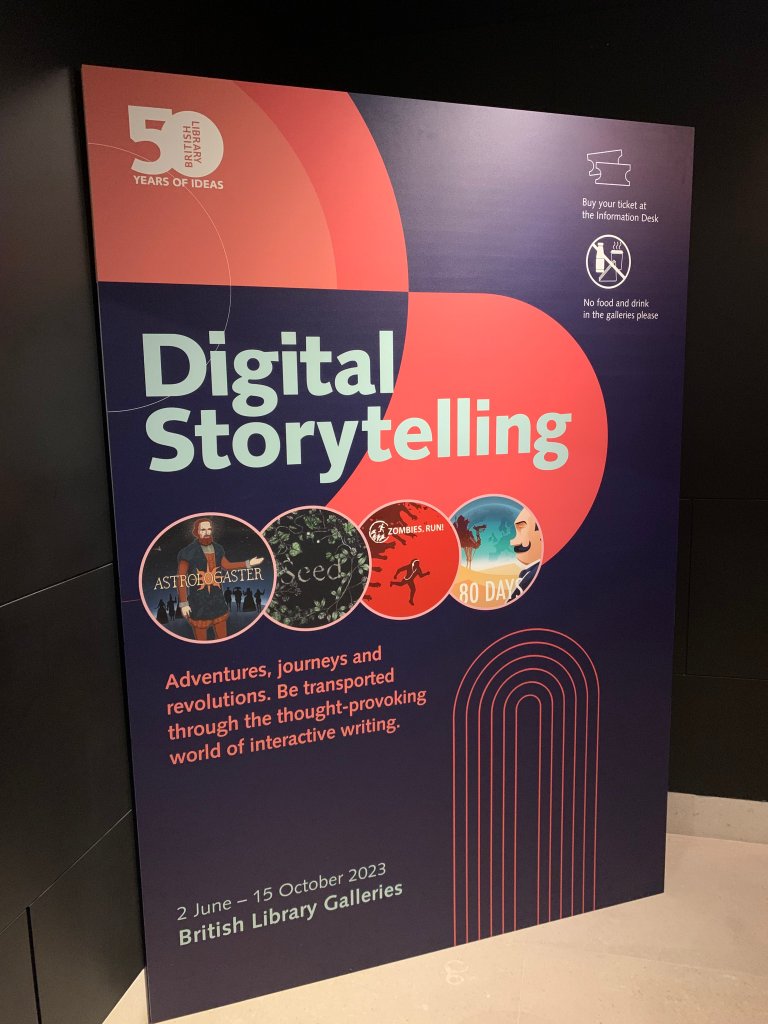
I went to see the British Library’s Digital Storytelling exhibition just before it closed. I didn’t know much about it but as digital is one of my focuses for my AMA training, I thought I should go and explore what they’re offering.
This was a great experience for my digital studies. So far, I have read about digital practices, skills, and theory but it was wonderful to see these in practice and see why these artworks are so popular with people.
I could find the application of design thinking in both the artwork and at the exhibition – using value as the main theme – starting with value discovery (seeing what people want) to validation (research that there is a market for the idea) and delivery (creating something of value). Digital and storytelling have been important themes explored by museums in the UK. Both have been amplified during COVID when both were needed to connect to one another as a society and for museums to facilitate this connection. Digital has a long great history but again COVID made it more visible as a need, it reflected on inequalities in skills, experience and need. I think COVID didn’t necessarily bring forward the main ideas and theories of digital that promote equality, upskilling, and using technology as a tool rather than the focus – during COVID digital was used for its digital aspects. There were so many museum projects that were ignoring value and need and just wanted to be present so organisations could say they had offered something. There were also brilliant projects that supported the needs of people and offered authentic experiences, and these were highly used and recognised by people nationally if not internationally as well as by the sector. Successful and authentic projects have an easy and understanding language to make them accessible to all, offer new ideas but leave space for people to their own generate ideas, and facilitate new learning and interests for people as well as an experience. This exhibition did all these: new learning, new interests, easy language on all panels, introduction to people behind the artworks and a variety of topics and media.
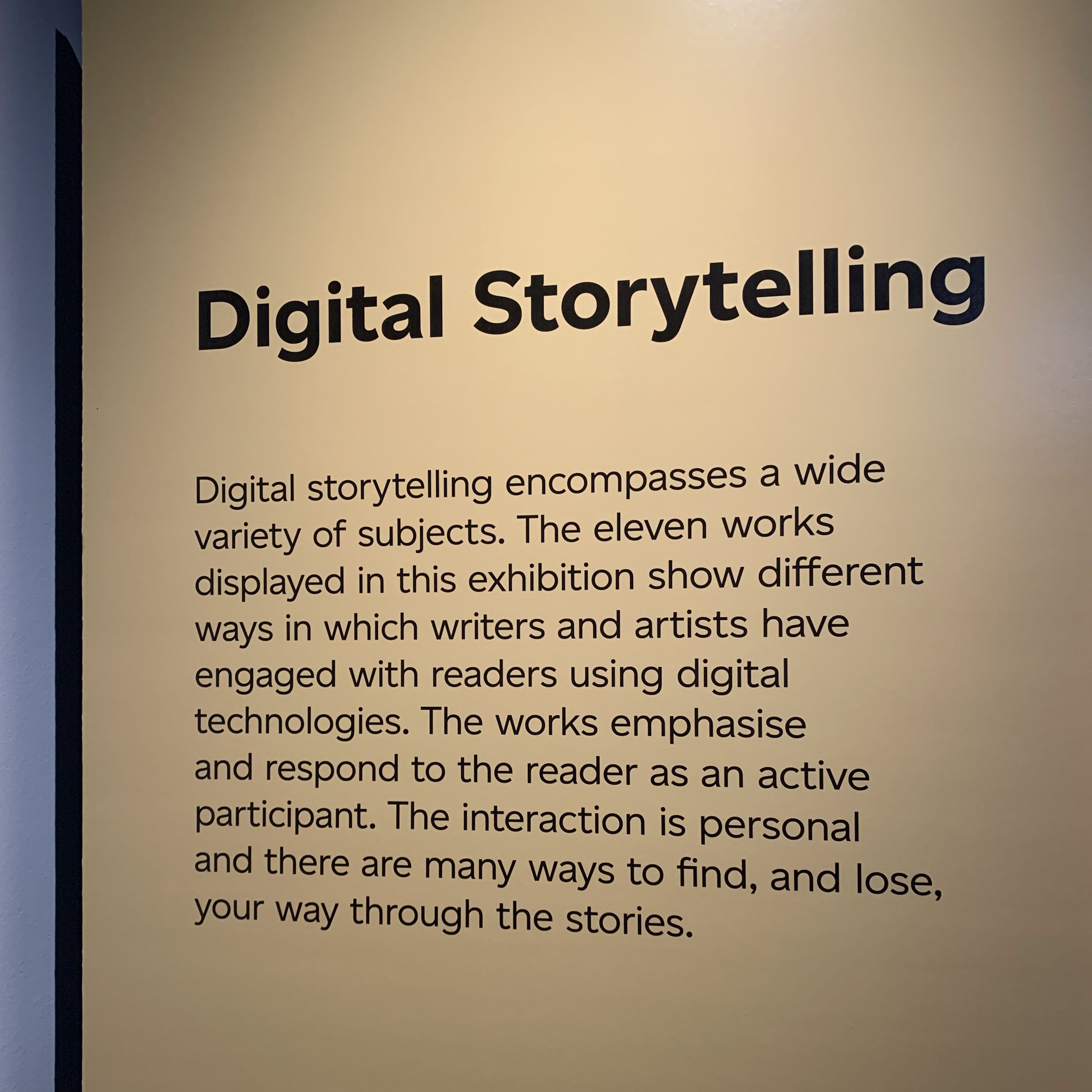
I could also see the use of play and interactivity ideas in the artworks and the exhibition: focusing on play ideas and practices to support learning, representation, connection, and storytelling. Most of the artworks were helping teach emotions and empathy – as it is an important part of storytelling. The British Library is great at storytelling and focusing on experiences and narratives as a library, but also as a museum! With Digital Storytelling the British Library offered an enabling and safe environment to engage and immerse into different worlds and themes.
*I struggled to name the examples while writing the review so I use a range of words (artworks, products, interactives) to describe the objects of the exhibition.
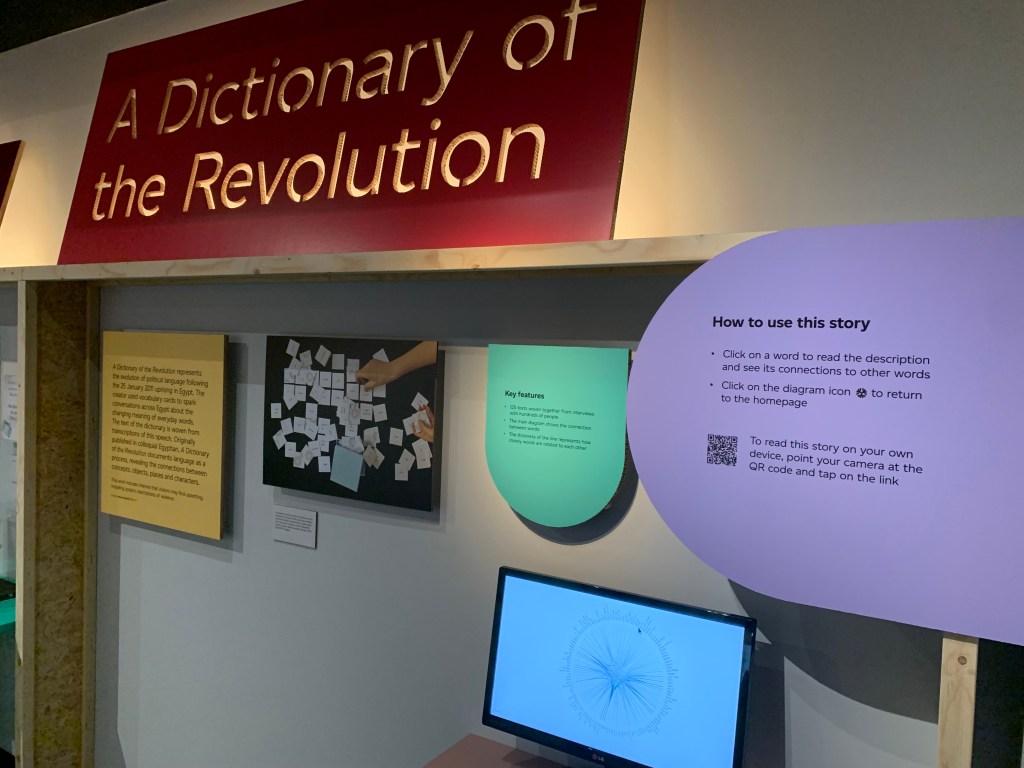
Digital Storytelling was an exhibition for ‘techies, writers, gamers, and lovers of tales’ which didn’t specify ages. As ages nowadays are not important regarding interactives and games, I think that was a great way of opening out this exhibition. For me, it felt that it designed with adults in mind. But even so, older children would enjoy these too – probably seen or tried some of the artworks already. It was a great exhibition using mixed learning techniques, showing people and their stories as well as professional acknowledgement. There were videos, short and easy-to-understand texts explaining the artworks, QR codes to connect you with more information or the interactives online as well as practical examples of the works. Each interactive had a short and simple instruction panel so anyone could engage with them (different digital levels).
It was quite a small exhibition featuring 10 digital storytelling artworks, but each has an interactive option and a background (personal story, background for what the creators tried to do). It was a great quality-over-quantity example.
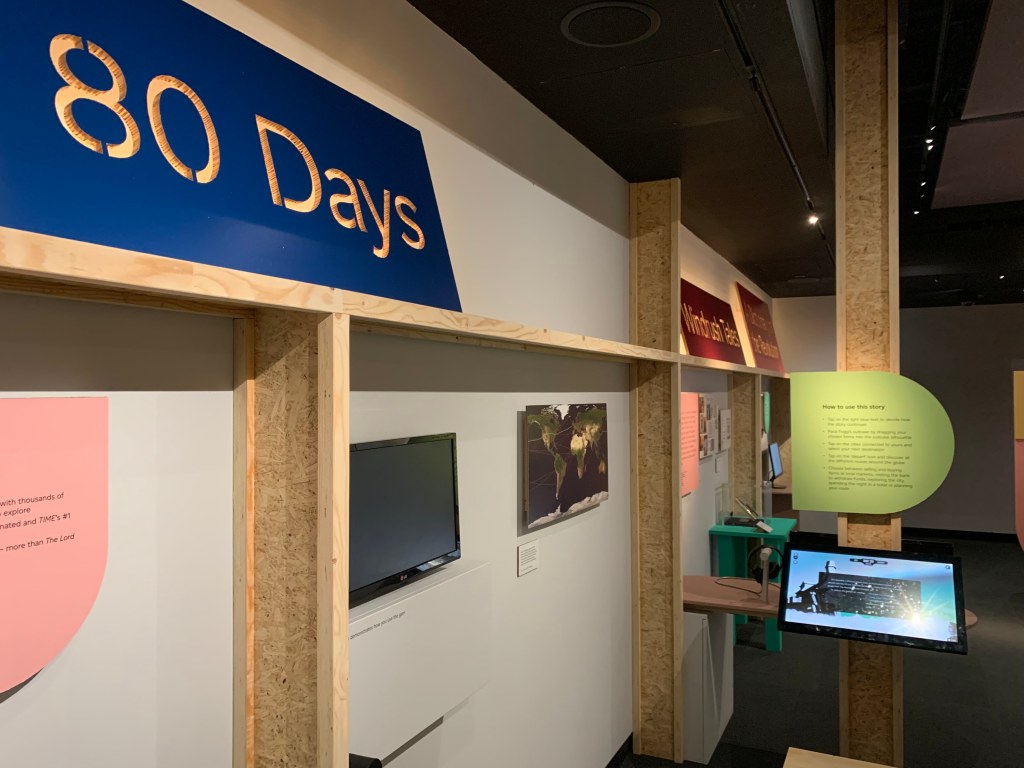
As I walked in (before seeing the interactives) I read a description of one of the interactives and thought I wish they showed us example parts of the games and interactive storytelling – I wasn’t even wishing to try them out for real, which they did! The first one I came across was 80 Days an interactive game based on Jules Verne’s book. And you could try the game. So, I did. I think I played for almost an hour without realising and only got as far as Russia. There were choices, dialogues and interesting add-ons that kept you engaged. By then it was almost 5 and the museum closed at 6 as it was a Thursday. So I went to explore more of the artworks (but unfortunately not in as much detail as 80 days).
Some of them were games or stories with digital interactive elements, some focused on personal experiences and others used history, fiction or real present events as their focus. All of them used digital elements but they were tools to communicate the message and theme of the stories rather than the other way around, which is incredible to see in practice. Each artwork is a story that incorporates digital elements that grew and evolved as the story has.
Wolves in the Wall started as a children’s book, then was adapted into a musical and then a VR version.
This is a Picture of Wind uses poems and live weather data to create a ‘weather poem for phones’.
Astrologaster is an interactive comedy set in Elizabethan London. It is funny while also historical (based on Simon Forman’s historical manuscript casebooks).
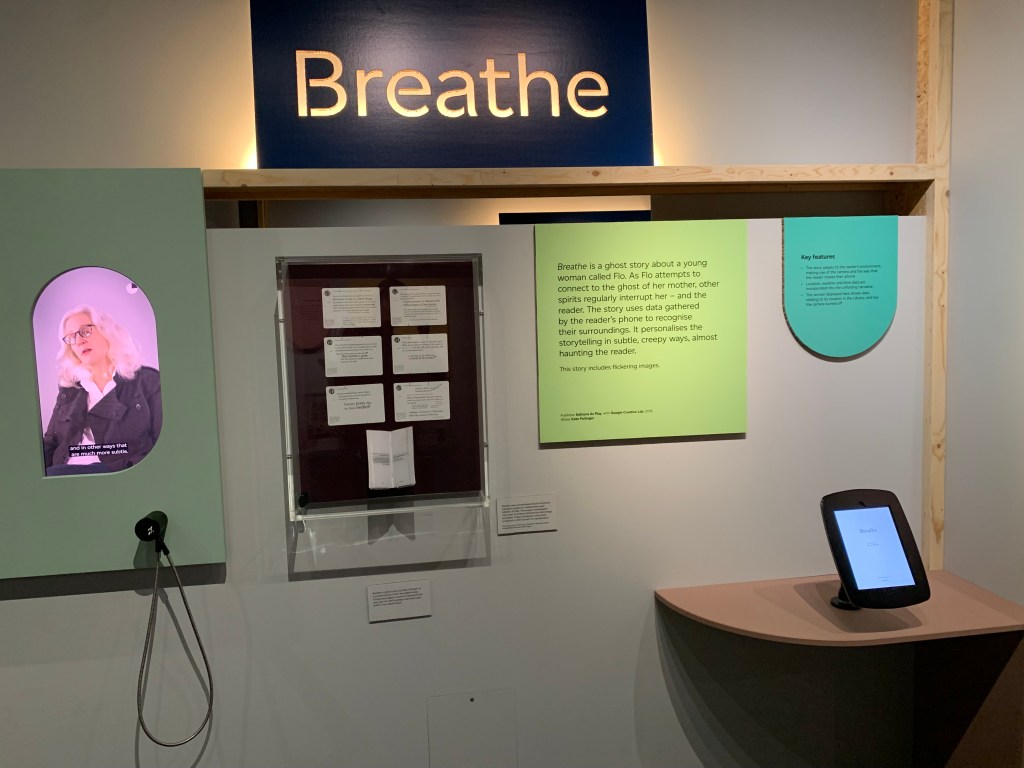
Breathe is a creepy ghost story that uses data from the reader’s phone to recognise their surroundings. It was haunting and I wasn’t brave enough to try it on my phone.
Windrush Tales is the world’s first interactive narrative based on the lived experiences of Caribbean immigrants invited to rebuild post-World War II Britain. It has a scrapbook style while also offering choices to its readers.
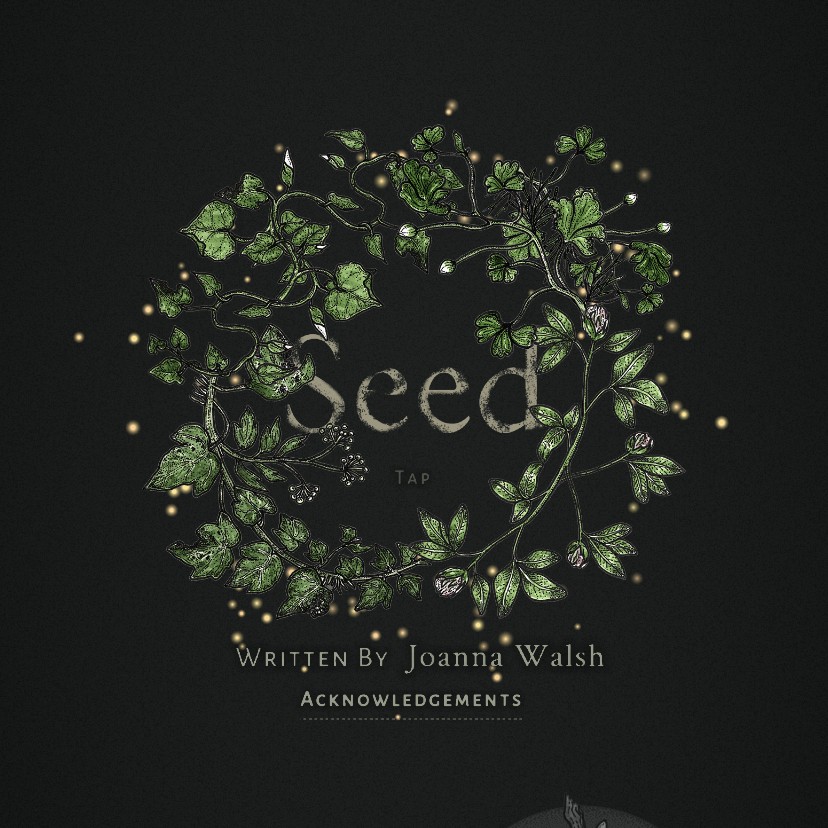
Seed a coming-of-age story that gets tangled and disentangled. The backdrop is an English village in the late 1980s, with echoes of recent nuclear disaster and epidemics. Seed invites you to get lost in the text and find your own way out. I didn’t really have time to engage with Seed and I didn’t get further than clicking on a few plants – so I missed out on the story. It has a beautiful design and I opened it on my phone to engage with it from home – can’t wait to dive deep into the story.
80 Days is an interactive fiction game released in 2014. The players can choose their route around the globe, with a clock that tracks and a set budget. As I played, I met various characters and learned about the period and different countries while keeping the main characters happy.
Zombies, run! Is an interactive app that uses narrative and gamification techniques to make exercise fun. They developed 10 seasons and over 500 missions to keep the story engaging to people listening. We were shown a video installation of empty London spaces while listening to the narrative in a headphone. We could also read the script of another episode. It looked fun and smart, great use of fiction and was a popular topic to make running interesting.
Clockwork Watch – a participatory storytelling project all set in a fantastical retro-futurist vision of Victorian England, complete with floating cities and sky pirates. They recently had a Museum Late with Clockwork Watch as a theme – offering ‘creative shenanigans around live performance from renowned chap-hop rapper Professor Elemental, portraits from artist Dr Geof, plus immersive VR demonstrations from Blockworks and Lancaster University’. Dressing up was encouraged and I saw some photos and videos on Instagram, it looked like an amazing night.
For this exhibition, the British Library offered pay-what-you-can days and several discount options including Art Pass and Museum Association tickets. I believe that this creates a more accessible and inclusive environment as ticket prices often hold back people from visiting – especially nowadays with the current living crisis.
All floors of the Library have step-free access, including all the Reading Rooms, events spaces, exhibitions and Learning Centre. They offer large print to all the exhibitions and induction loops and infra-red hearing systems points. There are also regular accessible events and tours – you can find out more on their accessibility page or email them with any questions.
People at reception would be more than happy to help. They were helpful and welcoming during my visit.
The British Library has a great gift shop with a range of beautiful books, gorgeous bags, and great gifts for all ages. The cafe is on the first floor – great selection of pastries, cakes and sandwiches and good coffee. It is a bit dark as one wall is covered with several floors of books and bookcases. It is an amazing sight.
I love the British Library and I think it is often underrated by people. They have great exhibitions; the last time I was here was for Paul McCarthy’s Display of Unseen Lyrics and Elizabeth and Mary Royal Cousins Rival Queens exhibitions. They have an upcoming exhibition Fantasy: Realms of Imagination that is opening next Friday and I can’t wait to see it. They did a fantastic job with the Digital Storytelling exhibition. I only wish that they could have listed and linked all the artworks for us to find easier.
 Hugs and Buttons