“From design classics to cutting-edge catwalk creations, Beyond the Little Black Dress deconstructs this iconic garment and examines the radical power of the colour black in fashion. The little black dress became a wardrobe staple and a blank canvas for future generations to reflect broader political and cultural shifts, challenge social norms around race, gender and sexuality and reflect evolving ideals of beauty and identity. Discover how the nuances of the colour black have made the little black dress a contradictory garment, from the well-mannered cocktail attire of the early 20th century to the leather and latex worn by members of punk and fetish subcultures. Featuring over 60 garments, the exhibition charts a century of fashion through a series of themed, immersive displays. See early 20th-century pieces alongside contemporary looks and ground-breaking Black British designers.“
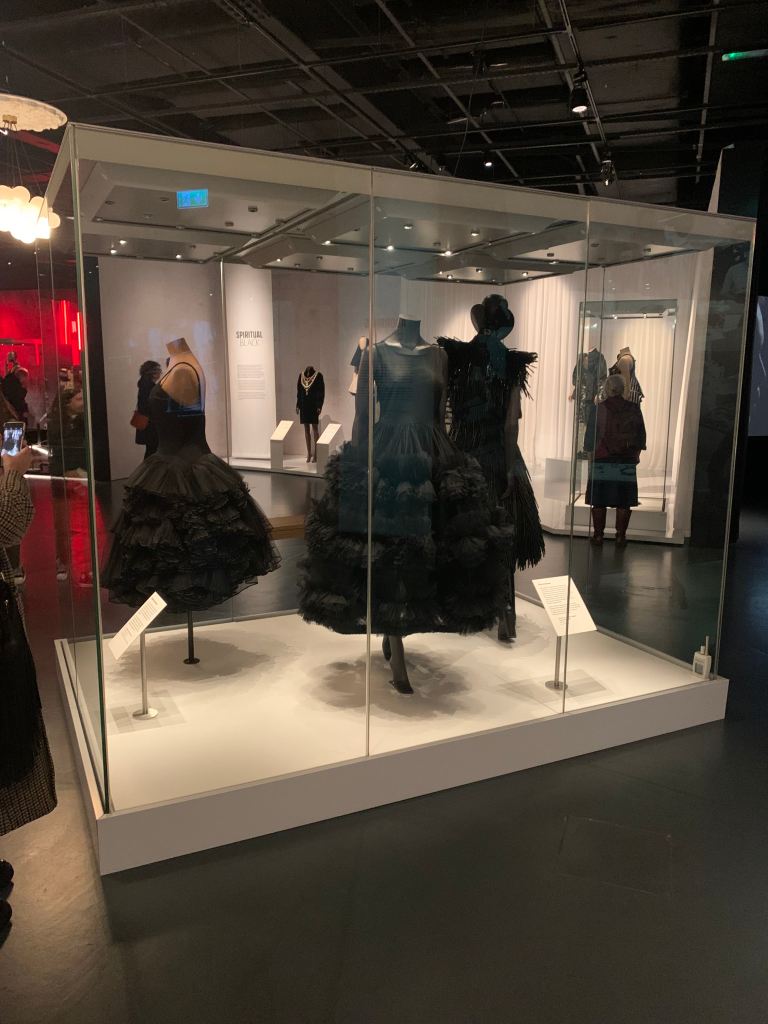
I’ve been meaning to visit for months now and just didn’t have the time or opportunity until now. I also went to visit the Museum of Childhood which felt like a mix of the new Young V&A with their new Life, Learn and Play Gallery and upstairs more like the Museum of Brands with old toys, brands and games. It was a good visit but wasn’t quite grabbing the attention of a child (went with my 12-year-old niece).
This exhibition stands alongside all the other successful and popular fashion exhibitions. I think museums realise that if they do a fashion exhibition right that could be their blockbuster exhibition. Worked for some and not so much for others. For me, this was on the successful side. It was a great experience from the gorgeous dresses to reaching out on the theme to talk about subcultures, religion, makers, fashion history as well as reaching towards the future with upcoming and groundbreaking designers. I think fashion exhibitions are most often designed with women, fashion fans and adults in mind for their target audience, but successful ones work for men and older children too! I think the Beyond the little black dress exhibition was great as it was interesting for anyone visiting (we only saw very few men or children). My niece really enjoyed the exhibition and managed to write up a review based on her favourite dresses. While it was all about fashion, it incorporated interesting elements of design, history and people.
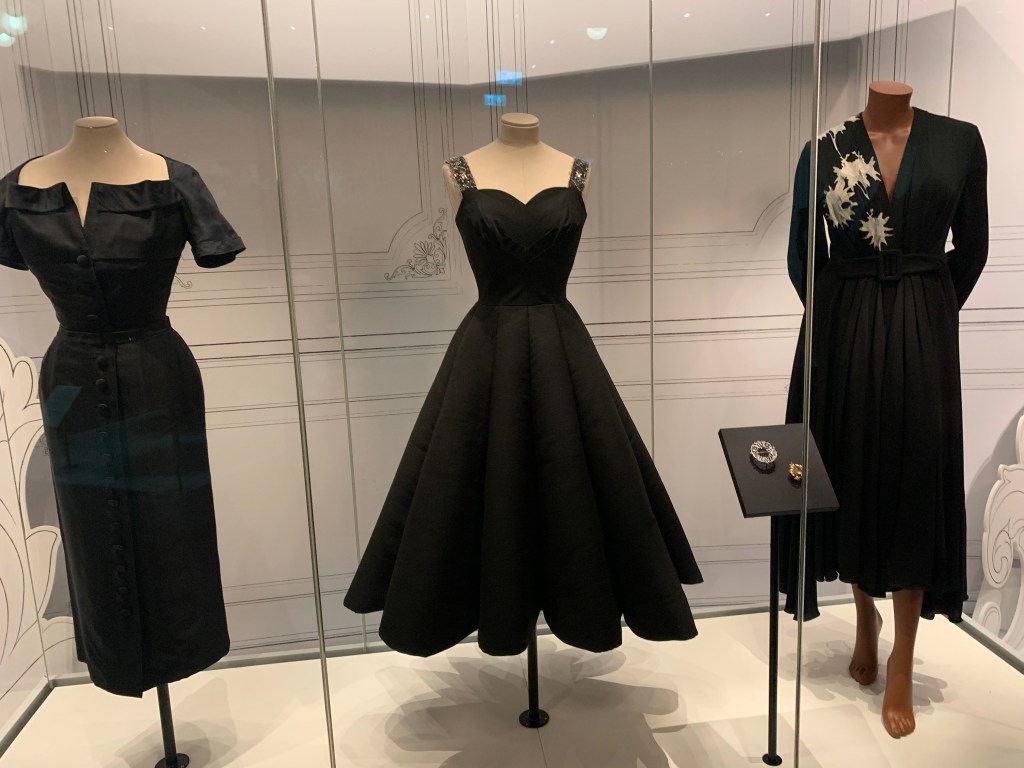
The exhibition was 3 small rooms (not that big), open but designed smartly to accommodate the different topics. There were different light and sound setups to mirror the dresses and themes, so the first room was brighter with a classical music background to highlight the classic black dresses mostly from the mid-twentieth century.
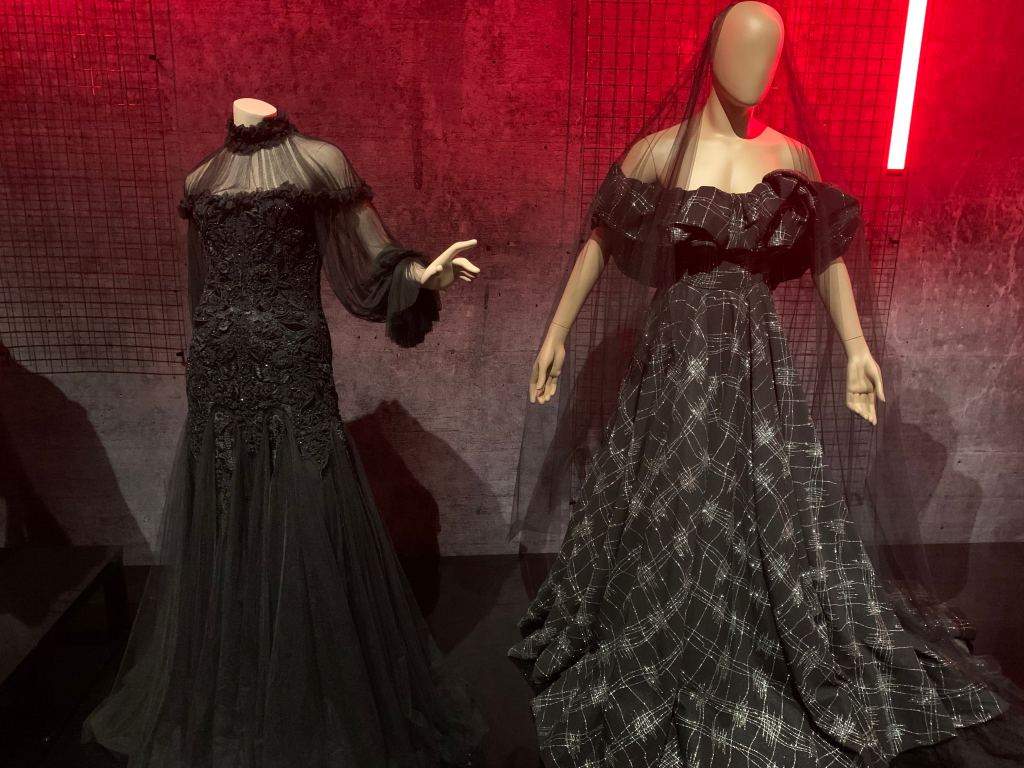
Then the second room had some deep sounds going on and a dark dim setup with red lights on the right side (behind the more sexy and religious dresses). The room had a platform in the middle to showcase the subculture dresses.
The third room focused on the present and future, highlighting sustainable and futuristic design and black designers introducing us to Afrofuturism.
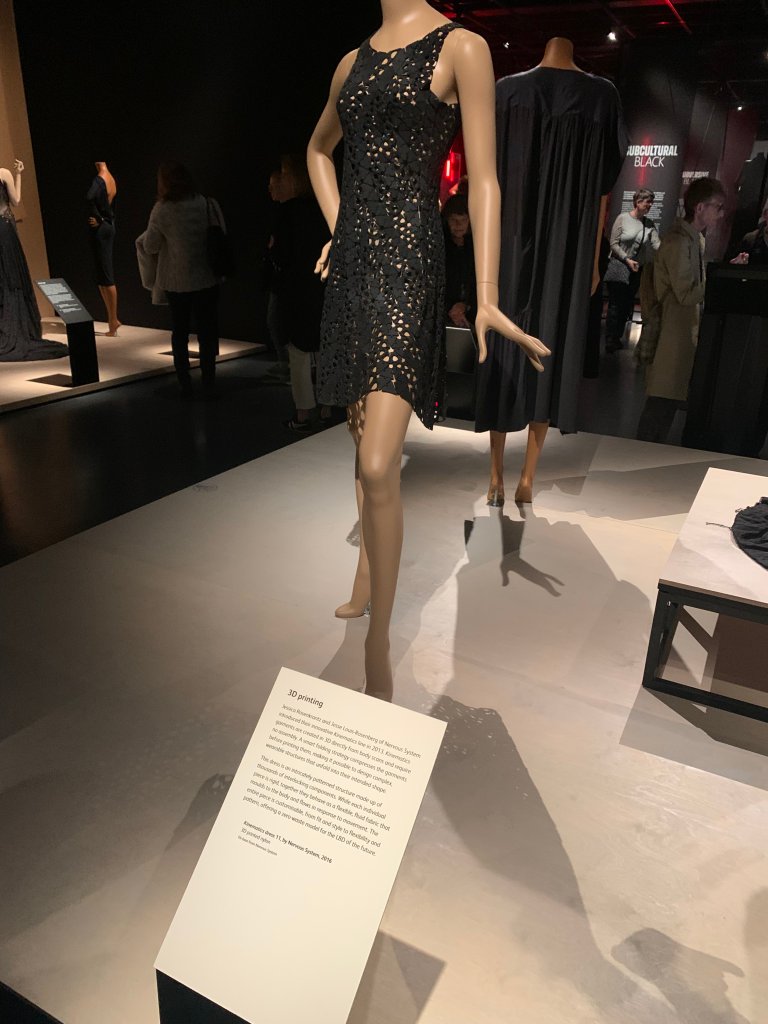
It was a great atmosphere for the exhibition with the play of the lights, sounds and different heights but in the dark areas, it was difficult to see the dresses never mind take pictures of them. We liked the sounds as it made the exhibition a bit more multi-sensory and engaging. Some areas had great contrast with their panels behind (while wall, beige paper design pattern) which helped emphasise the dresses in front of them. The exhibition greatly used mixed media including videos, interviews, panels, and photos. The museum also developed an amazing events programme: conversations, film screenings, museum lates, and an illustrations class. They used great social media marketing; their Instagram feed highlighted the exhibition while not overpowering the other areas of the museum. They did posts with models wearing black dresses outside the museum, reels showing us the curators’ behind-the-scenes work, linking images of the exhibition to pop music and stars, and promoting their events with high-profile fashion people who are involved in their events programme.
Regarding the accessibility elements of the exhibition, both my niece and I agreed that it was accessible but would have been more difficult for some people. Some of the dresses were placed too high for people in a wheelchair or lower eye level to fully see. Some dresses were placed in dim, dark areas which were hard to see. There was enough space for people in wheelchairs to navigate but possibly not wide enough to see the dresses in full. Also, the lift was a little bit further away, we came up on the escalator straight to the entrance. The panels were placed at a good level perfect people with different heights. Overall accessible but feel like it was maybe an afterthought.
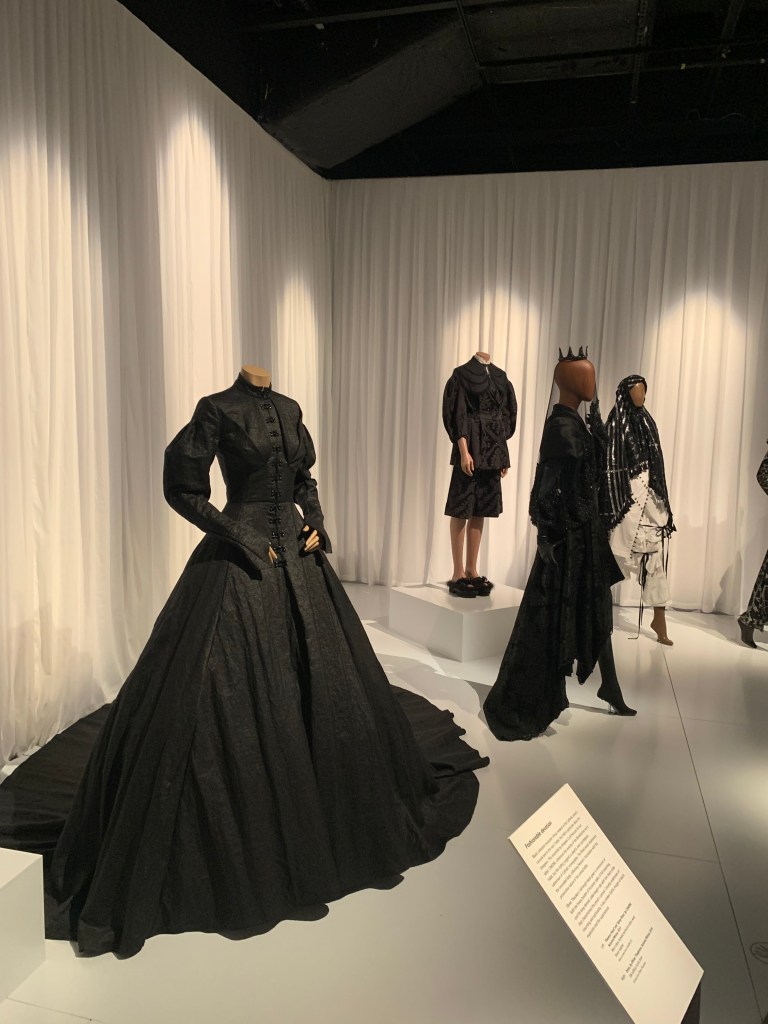
I really liked this exhibition as it focused on a theme which was quite diverse to begin with (different styles, designers and stories) but broadened it out even more including fashion styles and designers we might not think of normally. It uses different perspectives to explore the black dress phenomenon including streetwear, punk, goth, sexy and sexual, ball gowns, classic designers but also new and ground-breaking ones. The sounds matched the topic and theme of each room. Shoes and jewellery were included which broke up the colour black. The sub-themes which were explored were: well-mannered black, refashioning black, spiritual black, subculture black, shades of black, subversive black, black futures, a new black, and design in black. We had a great time looking around and learning new things while exploring our styles and fashion choices. It was a great conversation starter (although I just ignored the S&M dresses and didn’t explain that to my niece). I loved the topic, theme, and the beautiful and sometimes weird dresses, both old and new.
 Hugs and Buttons